
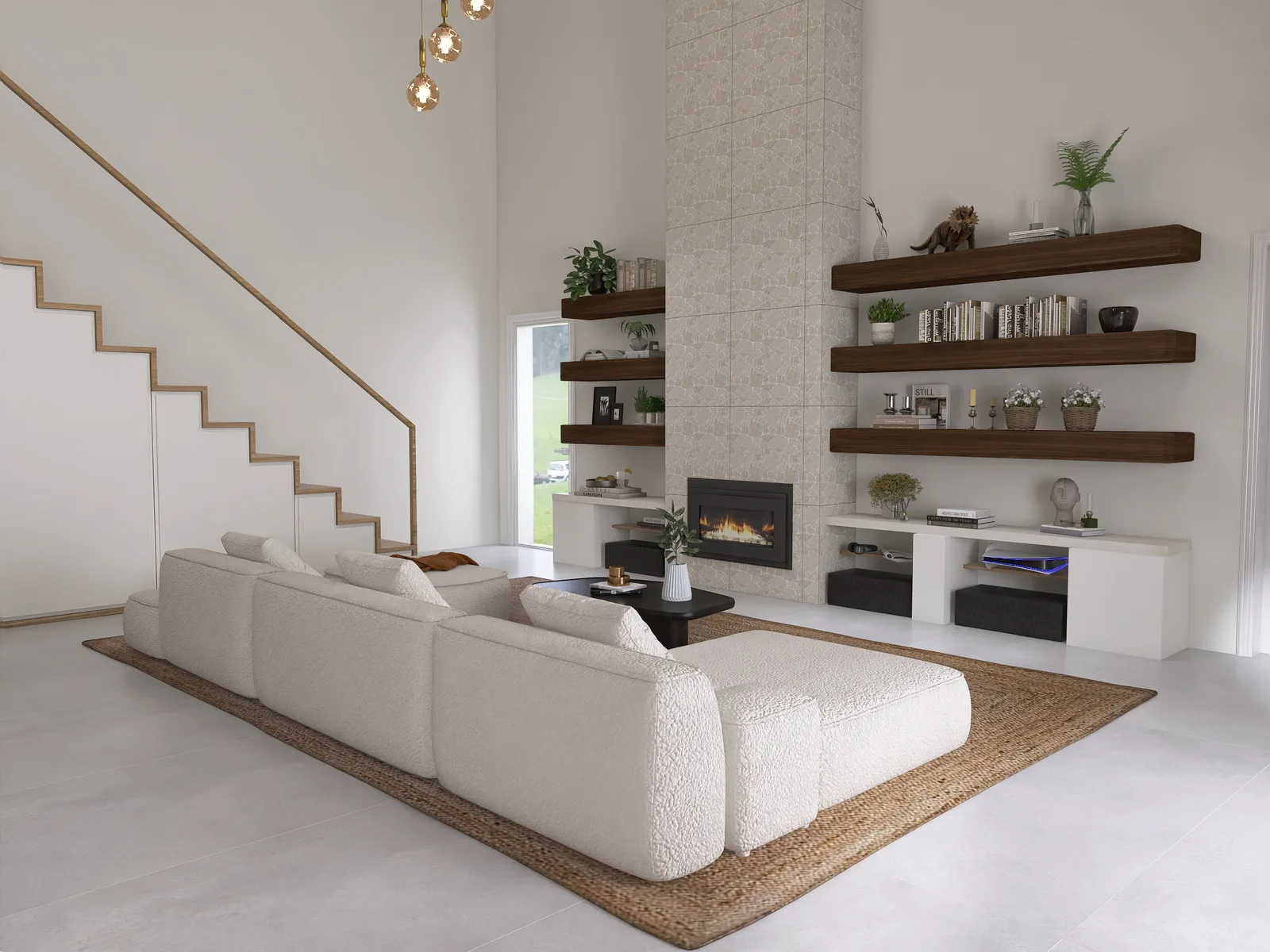
The three job titles sound like three price levels for the same thing. They are not. They describe three different responsibilities, and only one of them can put a signature on the drawings your town hall wants to see. Choosing wrongly is rarely dramatic, it is expensive in a quiet way: a second set of fees, a kitchen designed twice, six weeks lost while someone finds out who is allowed to submit what. This guide is written for people renovating in Portugal or in Germany, often from another country, who want to know which phone call comes first.
The three roles at a glance
Strip away the marketing and the division is clean: the architect answers for the building, the interior designer answers for how the inside works and feels, the decorator answers for the layer you can carry out of the door.
| Architect | Interior designer | Decorator | |
|---|---|---|---|
| Core scope | Structure, façades, roof, volume, change of use | Layout inside the shell, kitchens and bathrooms, joinery, lighting, materials | Furniture, textiles, colour, art, accessories |
| Signs licensing drawings | Yes, when registered | No, unless separately registered | No |
| Typical deliverables | Licensing set, coordination with engineers | Plans, elevations, joinery and lighting drawings, specifications, tender comparison | Mood boards, sourcing lists, styling |
| On site | Approvals and building works | Trade coordination, stage checks on site, final styling | Delivery and placement day |
| Protected title | Yes (PT, DE, UK) | Only Innenarchitekt in Germany | No |
That last row matters more than people expect. “Architect” is a protected title in Portugal, in Germany and in the UK; in Germany “Innenarchitekt” is protected too, and registration requires a degree plus two years of supervised practice. “Interior designer” and “decorator” are not regulated titles in Portugal, Germany or the UK, so the label tells you nothing. Portfolio, process and references do. To be clear about our own position: Dania Lima works as a designer, not as a chamber-registered Innenarchitektin, and where a project needs a signature we bring in registered architects and structural engineers locally.
When you legally need an architect
Portugal
Projects submitted to the câmara municipal for a licence or a comunicação prévia may only be signed by technicians registered with a public professional association (RJUE, article 10), and architecture projects specifically are prepared by architects with valid registration in the Ordem dos Arquitectos (Lei 31/2009, article 10 nº 2). The usual triggers are structural work, changes to the form of façades or roofs, changes to the cércea (building height), removal of façade azulejos, extensions and change of use.
Heritage adds a second layer: classified buildings, buildings being classified, and exterior alterations within their protection zones require a licence even for conservation work (RJUE, article 4 nº 2 d). If your flat sits in the Baixa Pombalina, in Chiado, or in the UNESCO-listed upper town of Coimbra, assume that layer applies until the câmara tells you otherwise. The regime was simplified in 2024 by the Simplex Urbanístico, but the signature rules above still stand. The consolidated text is public, you can read the RJUE at the PGDL database.
Germany (NRW)
Anything requiring a Bauantrag (an extension, a loft conversion, a Nutzungsänderung, structural work outside the smallest residential building classes) must be submitted by a bauvorlageberechtigte person: an architect, a listed engineer, or an Innenarchitekt within the limits of interior-related building changes (BauO NRW, § 67 Abs. 3). Inside single- and two-family houses, load-bearing components may be altered without a permit only when an authorised structural planner certifies that stability is not endangered (§ 62 Abs. 1 Nr. 11 b). Budget for a Statiker whichever designer you hire, and check the current text of the Landesbauordnung NRW rather than a forum post. And do for the Bauamt what you would do for the câmara municipal: confirm the status of your works in writing with the local building authority before anything is demolished.
If you are used to the British system, do not transfer your assumptions: internal alterations in England rarely need planning permission but may need building regulations approval, and the register of UK architects is public at arb.org.uk. Portugal and Germany bundle these questions differently.
Where an interior designer leads the project
There is a large, well-defined space where no architect’s signature is required at all. In Portugal, conservation works and alterations inside a building or fraction that do not affect structural stability, the cércea, the form of façades or roofs, and do not remove façade azulejos, are exempt from prior municipal control (RJUE, article 6 nº 1). For those exempt works, the written and drawn pieces may be prepared by other technicians (Lei 31/2009, article 11). That is the interior designer’s legal home ground: kitchens, bathrooms, non-structural partitions, joinery, lighting and finishes.
In NRW the logic is similar. Maintenance is procedure-free (§ 62 Abs. 4 BauO NRW), and in buildings without fire-protection requirements non-load-bearing components need only a certificate of harmlessness from a bauvorlageberechtigte person. A flat that changes completely inside its existing shell is normally designer-led, with an architect or structural planner engaged for the one document that needs a signature.
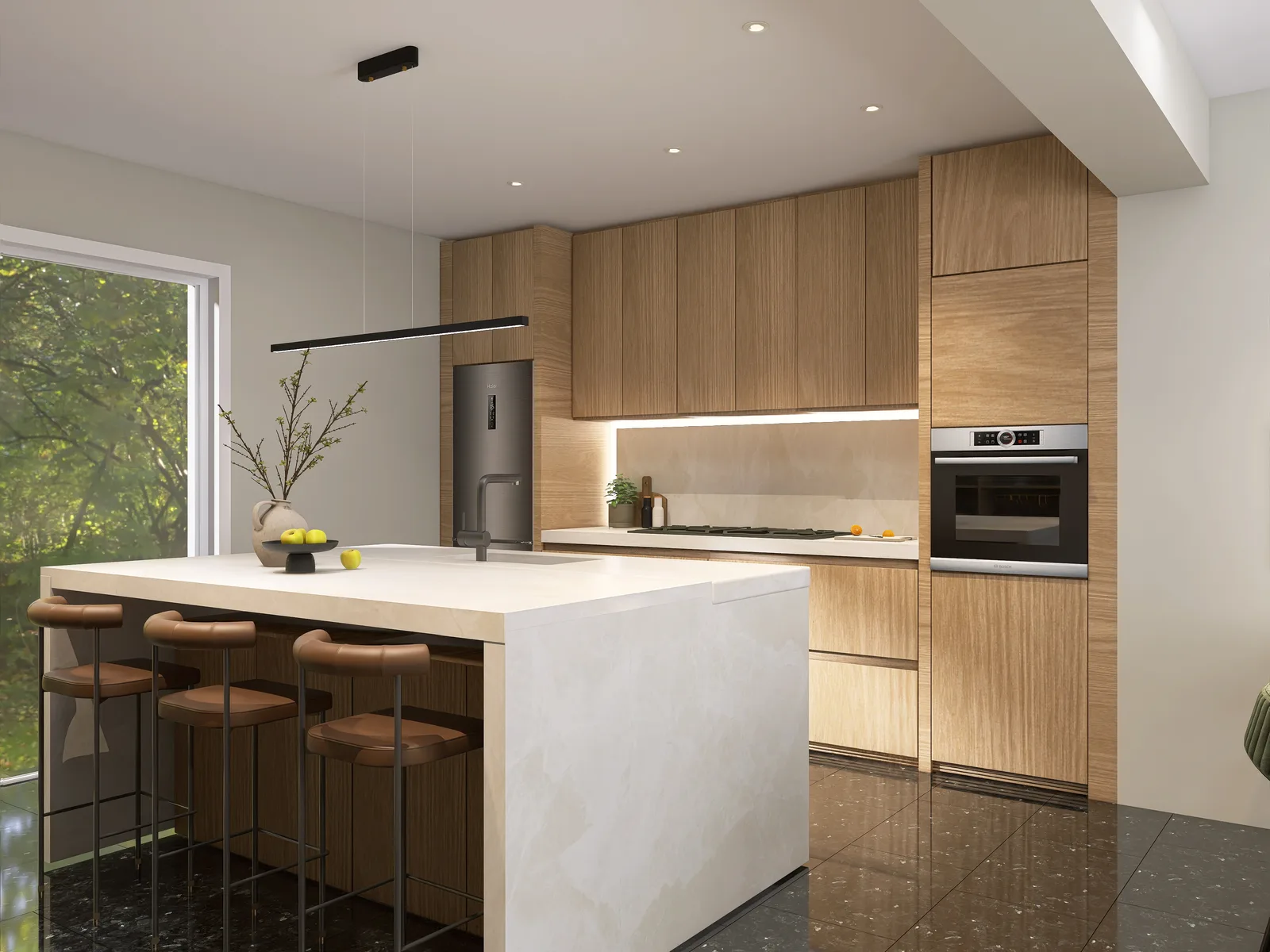
Leading, in practice, means the unglamorous middle of a project: measured survey, layout options, a 3D concept, the lighting and socket plan, joinery drawings, material and fixture specifications, comparing builders’ quotes line by line, coordinating trades and suppliers, checking the site against the drawings, and the final styling day. At Daradiant that runs as full-service interior design; if you only need direction, an interior design consultation or our online e-design covers the thinking without the site management.
What a decorator does, and does not do
- Does: colour schemes, furniture selection, textiles, rugs, art and accessories, sometimes curtains and wallpaper, the styling of a room that is already finished.
- Does not: move walls or plumbing, redesign a kitchen or bathroom, produce technical drawings, run a tender, manage contractors, or take responsibility for building rules.
- Good fit: refreshing a furnished rental, preparing a holiday flat for the season, finishing one room after the builders have gone.
- Warning sign: anyone offering to move the kitchen without a single drawing. That is design work, and it needs a designer or an architect.
How designer and architect share one renovation
On most serious renovations the answer is not either/or. It is a sequence, agreed before anyone starts drawing.
- Brief and layout. The interior designer establishes how you actually live: rooms, storage, light, circulation, the non-negotiables.
- Approvals. The architect translates whatever needs consent into a licensing set and signs the termo de responsabilidade or the Bauantrag.
- Engineering. Structural and services specialists cover what the law reserves for them, in Portugal the licensing team is a project team by law (Lei 31/2009, article 10 nº 1).
- Execution. The designer returns to the front: joinery, finishes, tender comparison, trade coordination, site checks, styling.
Decide at the outset who coordinates and who holds the client relationship. On interior-heavy projects that is usually the designer, with the architect engaged for a defined package rather than the whole job. The German HOAI phase list (from initial appraisal through design, tendering and site supervision) is a useful neutral checklist for splitting scope, even on a project in Portugal.
One more practical point for international clients: we work in Portuguese, English and German, which means you are not the translator standing between an architect, a building department and a carpenter. That alone removes a category of expensive misunderstanding, whether the project is in Lisbon or in Aachen.
Five situations: who to call first
- Kitchen or bathroom re-planned inside existing walls. Interior designer first, then plumber and electrician. An architect only if a wall turns out to be structural or a façade opening changes.
- Full refit of an old Lisbon or Coimbra apartment. Both from day one: designer for the brief and the layout, architect for the licensing set, because of heritage zones and possible timber structure. See how we work as your interior designer in Lisbon or in Coimbra.
- New build handed over with standard finishes. Designer leads. No architect needed unless you change what was licensed.
- Café, clinic or office. Clarify change of use and accessibility with the authority first, then bring in commercial interior design for the space your customers experience.
- Managing everything from abroad. A designer who works remotely and has on-site phases built into the process, with local registered partners brought in only where a signature is required.
How to avoid paying twice for the same work
Duplicated fees almost always come from the same root: nobody wrote down where one scope ends and the next begins. Three habits prevent it.
- Ask for scope by phase, in writing. Survey, concept, technical drawings, licensing, tendering, site supervision, styling. Lay the proposals side by side and strike the overlaps before you sign anything.
- Agree who owns the drawings and in which file formats, so the licensing plans feed the execution set once instead of being redrawn from scratch.
- Put permit responsibility on paper: who submits, who signs, who talks to the câmara municipal or the Bauamt, and who commissions the structural engineer.
Do that at the start and the three professions stop competing for the same paragraph of your budget. They start doing what each is genuinely better at.
Frequently asked questions
Do I need an architect to renovate an apartment in Portugal?
Only if the works need municipal licensing or a comunicação prévia, typically anything touching structure, façades, roof form, building height, façade azulejos, or a classified building and its protection zone. Interior alterations that leave all of those untouched are exempt from prior control under the RJUE, and the written and drawn pieces for them may be prepared by other qualified technicians, such as an interior designer. Confirm with your câmara municipal before work starts.
What is the difference between an interior designer and an interior architect?
In Germany, Innenarchitekt is a protected chamber title requiring a degree plus two years of supervised practice, and in North Rhine-Westphalia it carries a limited right to submit building applications for interior-related building changes. “Interior designer” is not a regulated title in Portugal, Germany or the UK, so the practical difference lies in scope and experience: judge by portfolio, process and references rather than by the word on the business card.
Can an interior designer manage contractors?
Yes. Coordinating trades and suppliers, checking execution against the drawings and signing off finishes is a core part of full-service interior design. What a designer cannot do is sign documents reserved for registered architects or engineers, such as a licensing project in Portugal or a Bauantrag in Germany.
Is a decorator cheaper than an interior designer?
A decorator’s scope is narrower (furnishing and styling a finished room) so the fee usually is too. If your project involves moving walls, replacing a kitchen or a bathroom, or coordinating builders, hiring a decorator first often means paying again for a designer later.
Who do I contact first if I am planning from abroad?
Start with an interior designer who works remotely and speaks both your language and the local one. They scope the project, tell you which parts need a registered architect or engineer, and bring in local partners for those signatures. At Daradiant the concept phase runs over video, with on-site phases planned in Portugal and in NRW.
Your next step
If you can name the professionals your project needs, you can plan it. Send us the flat, the timeline and the ambition and you will have a free, transparent proposal within 24 hours, tell us about your project. If the question is still “who do I even call first”, start with a €99 1:1 Design Call and spend sixty minutes getting the sequence right. At Daradiant, dreams are never too big.