← Daradiant Interiors

English-Speaking Studio · Coimbra & Central Portugal

Interior designer in Coimbra for newcomers and owners abroad

A narrow flat above a shop on Rua Ferreira Borges, a 1960s T3 in Solum, a river-view apartment in Santa Clara or a white new-build shell near the Parque Linear do Vale das Flores, very different homes, one problem in common: nobody has drawn the whole thing before the builder arrives. Daradiant is the English-speaking interior designer who does that drawing first, then sources the pieces and runs the works with Portuguese trades, whether you are already here or still overseas.

The Coimbra hillside seen from the Mondego, tiled roofs stacked up to the university tower crowning the old town

Who moves here, and what they buy

Why Coimbra, and what an interior designer does before the builder starts

Coimbra is Portugal’s sixth-largest city (around 140,800 residents at the 2021 census) and it runs on two institutions. The Universidade de Coimbra, whose Alta e Sofia ensemble has been on the UNESCO World Heritage list since 2013, counts roughly 25,000 students, in a city with about 35,000 higher-education students in total. Below it, in Celas, the Centro Hospitalar e Universitário de Coimbra is the largest hospital centre in the country. Add the technology that grew out of the university (Instituto Pedro Nunes, Critical Software’s global headquarters, the iParque science park) and you have the people who write to us looking for an interior designer in Coimbra who works in English: retired couples who came for the healthcare and the culture, visiting professors, engineers arriving with a family, and diaspora families deciding what to do with an inherited flat.

What they buy falls into a handful of patterns. A discounted renovation flat in the Baixa or the Alta, where the historic core has spent decades emptying out and the municipality now runs Urban Rehabilitation Areas to bring it back. A generous but dated apartment in Solum, Celas or Olivais. A river-side flat in Santa Clara near Fórum Coimbra, looking straight at the Alta skyline. Or a new T2 or T3 in Vale das Flores and Quinta da Portela, delivered with a garage and underfloor heating and absolutely no personality. The flatter quarters near the water tend to win with retirees; the Alta is beautiful and steep, and stairs matter more than a viewing in July suggests. Almost none of this is new construction: what we are asked for is apartment renovation in Coimbra, a plan drawn for one decade being made to work in another.

  • Full renovations and furnishing, planned and supervised from first survey to styling day
  • Concept, drawings and material selections online, on-site phases planned in blocks
  • One English-speaking contact for the contractor, joiner, electrician, suppliers and the condomínio
  • Custom joinery drawn for narrow old-town plans and awkward mid-century rooms
  • Fully remote? Online e-design gives you concept, plan and shopping list wherever you live

Four kinds of Coimbra brief

Old-town flat, mid-century block or new build: four Coimbra starting points

The address changes almost everything: what the works cost, who has to sign them off, and where the interior design effort goes. These are four situations a city like Coimbra typically produces.

01

Alta & Baixa buildings

Eighteenth- and nineteenth-century merchant houses around Praça do Comércio and Rua da Sofia: deep plans with daylight only at the two ends, timber floors, thick masonry walls. The work is daylight strategy, honest storage and breathable finishes, and works of this kind need a licensed architect or engineer, whom we coordinate with rather than replace.

02

Mid-century Solum & Celas flats

The 1960s–80s blocks on the plateau have what new builds do not: room sizes. They also typically have a small closed kitchen, single-glazed aluminium windows and lighting from one ceiling point. Opening the kitchen, upgrading the glazing and keeping the good marble and wood instead of skipping it into a container is usually the whole brief.

03

New builds in Quinta da Portela

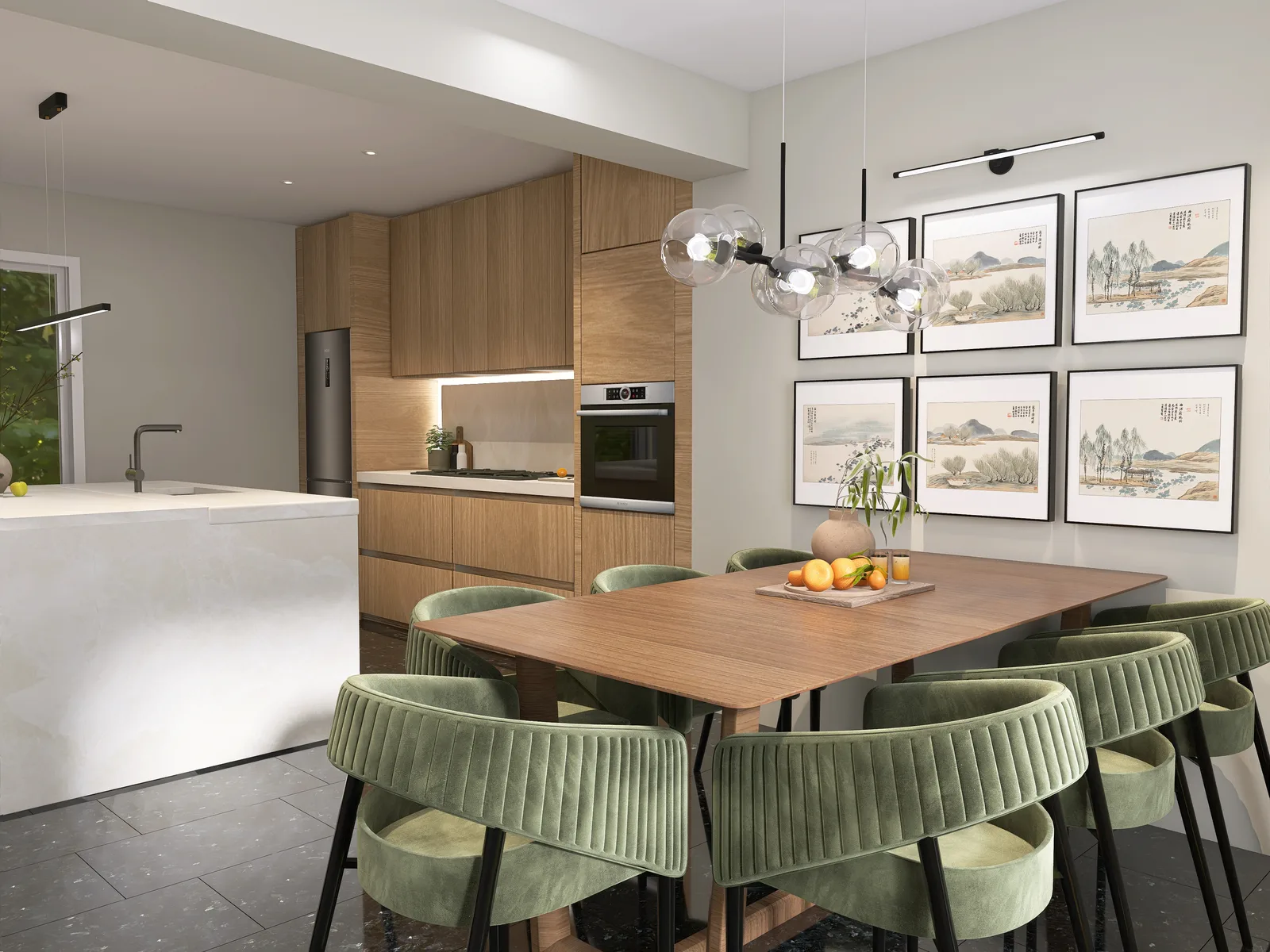
Air conditioning, underfloor heating, garage, and a large tiled floor that echoes like a lobby. Here the design job is acoustic softness, joinery that turns a hallway into storage, and colour and texture that make a white shell read as a home rather than a serviced apartment.

04

Inherited flats and rentals

Coimbra holds a large stock of second homes and empty flats waiting for a decision. Whether you plan to move in, keep it for the family or let it long-term to medical residents and academics, the interior design questions are the same: which existing details are worth restoring, and which finishes will still look right after five years of tenants.

Climate & materials

Damp winters, hot summers: designing for the Mondego valley

Coimbra is inland, so salt air is not the issue it is on the coast. Damp, fog and thermal contrast are.

Roughly 905 mm of rain falls here in a year, most of it between October and March, and winter nights sit around 5–7 °C while the valley fills with morning fog, something like 75 foggy days a year in this area. Then July arrives at 28–29 °C in the shade. A house viewed in summer sunshine and bought in September can feel like a different building by January, and this is the single most common surprise among people arriving from northern Europe or North America.

The answer is not a dehumidifier in every corner. It is a sequence: let the walls breathe, move the air, fix the glazing and the heating, and only then choose fabrics and floors that can live with a humidity swing. That sequence is interior design work done on paper, and it is where an interior designer earns their fee in Coimbra: we settle it during the consultation stage, before a single tile or sofa is ordered.

Breathable finishes on old stone

Lime-based plasters and mineral paints on old stone and masonry, never a vapour-tight coating that traps moisture inside the wall. Planned cross-ventilation, extraction where it is genuinely needed, and interior insulation where the rules allow it.

Light by orientation

Hillside rooms facing north need warm, high-reflectance walls and three or four layers of lighting to stay kind in December. West-facing river rooms need the opposite: exterior shading, linen sheers and lighter upholstery, or August becomes unbearable.

Comfort before furniture

Windows, heat pump or radiant floors, thermal curtains, decided first. Then wool or wool-blend rugs, cork and solid wood floors that tolerate the seasons, and the terracotta, oak, walnut and lime tones that sit naturally with Coimbra’s ochre and white façades.

Where your designer actually sits

Running your Coimbra project from a Lisbon studio

Let us be plain about where we are: Daradiant Interiors is Dania Lima’s studio in Lisbon, and that is where your English-speaking interior designer for Coimbra actually sits. There is no Coimbra office and no showroom in the city. What we do keep is a way of working that suits the city perfectly: Coimbra is a short drive up the A1 or a train ride away, so the phases that genuinely need a person in the room happen in the room.

That means survey and measuring on site at the start, supervision at the milestones where a mistake becomes expensive, and the final styling day. Those visits are planned in efficient blocks instead of scattered half-days. Everything else (moodboards, layouts, lighting plans, material selections, the long conversations where a home actually gets decided) happens over Google Meet, which suits a client still working in Toronto, Utrecht or London.

Between visits you get photographs and video walkthroughs, and every decision is written down and priced before it is made. Quotes, site meetings, supplier orders and condomínio questions are handled in Portuguese by the same person who briefs you in English. If you would rather stay entirely remote, e-design covers concept, plan and shopping list; if you want the whole thing carried, that is full-service design. Either way, requests are answered within 24 hours with a free, phased proposal.

Who writes to us

Typical briefs we receive from Coimbra newcomers

These are the shapes an interior design enquiry from Coimbra usually takes.

  • A retired couple buying a T3 in Santa Clara with the Alta in the window: single-level living, a bathroom that is genuinely accessible without looking clinical, and a guest room for children who visit twice a year.
  • A visiting professor’s family arriving in September and needing a calm, furnished flat near Celas before the school year starts, mostly e-design, finished with one styling visit.
  • A Portuguese-Canadian family with an inherited 1960s apartment in Solum: keep the marble hall and the wood, replace kitchen and bathrooms, and leave it ready either to let or to come home to.
  • A software engineer moving into a new build in Vale das Flores: a real home office, acoustic relief from the tiled floors, and storage for bikes, skis and gear that has nowhere to go.
  • An owner overseas turning a Baixa flat into a long-term rental for medical residents: durable finishes, good light in a deep plan, and a look that is grown-up rather than student.
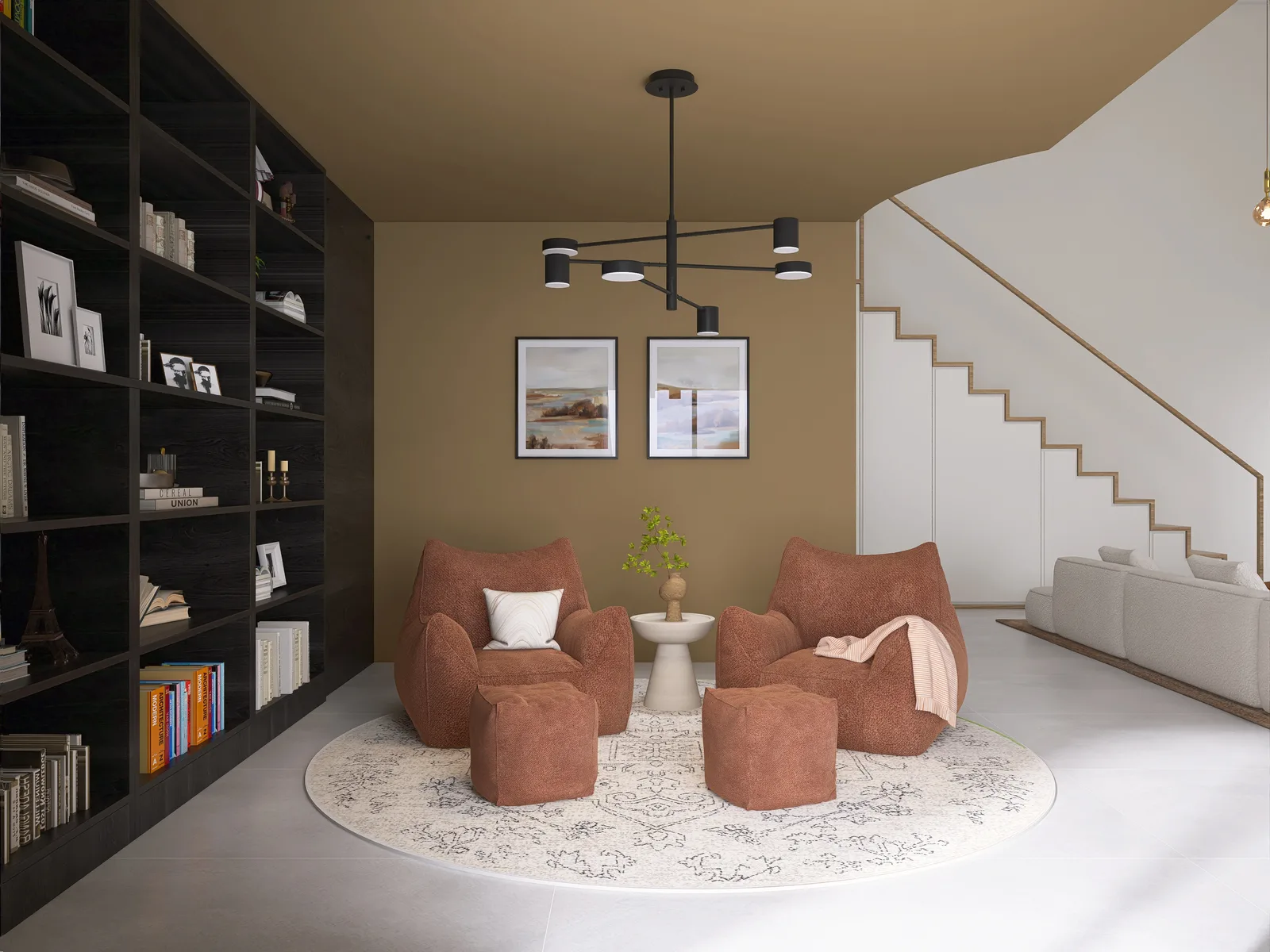
Reading nook with two terracotta lounge chairs and cube poufs on a round patterned rug, a tall black bookcase and ochre-painted walls and ceiling
An ochre reading corner: warm, high-reflectance colour and layered light for rooms that face away from the sun: Quinta Maluhia project.
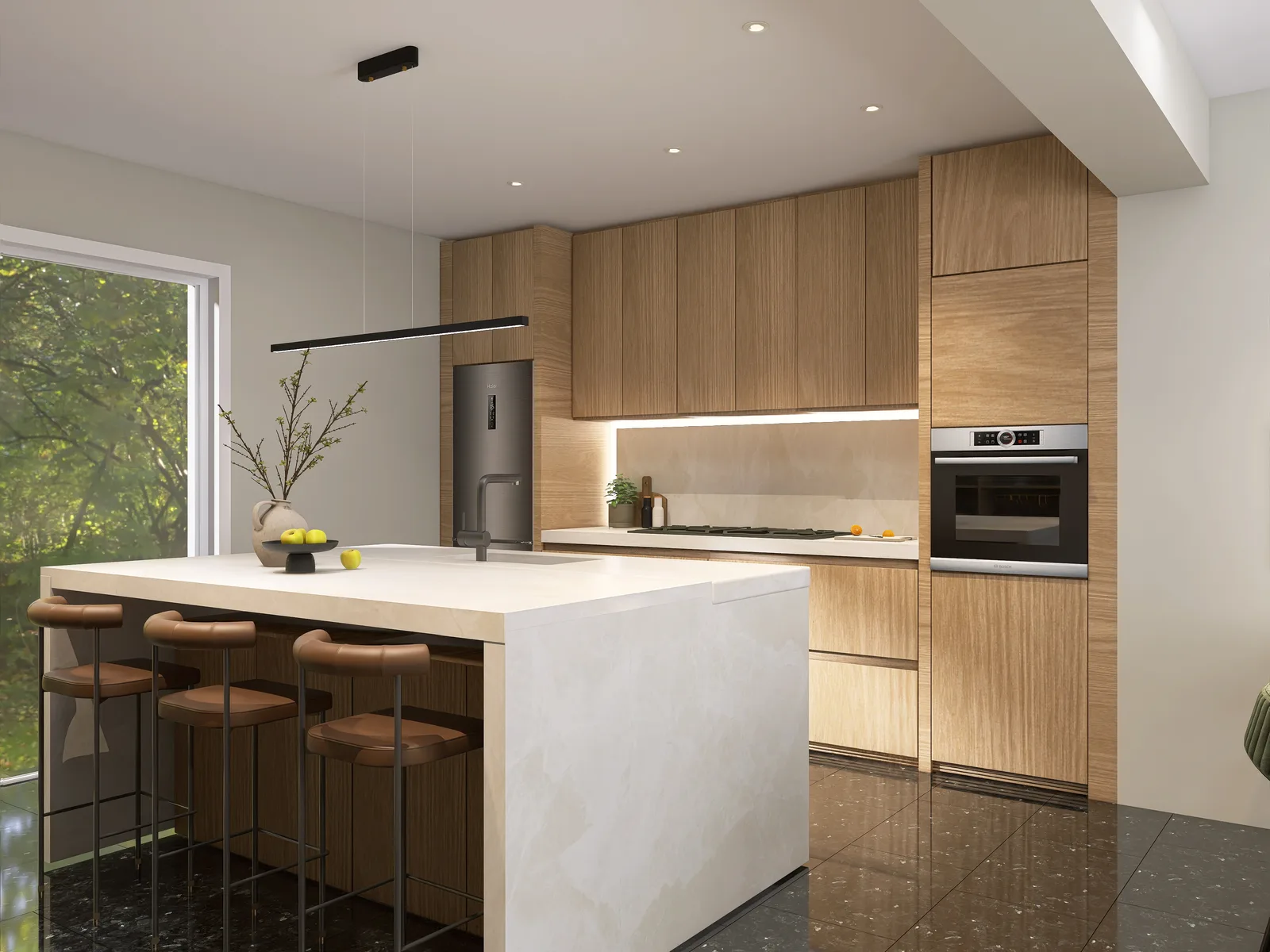
Light oak kitchen with a white stone waterfall island, backlit stone splashback and slim pendant lighting above the worktop
Light oak and stone: the kind of open kitchen that replaces a small closed one, or gives a new-build shell its centre: G56 project.
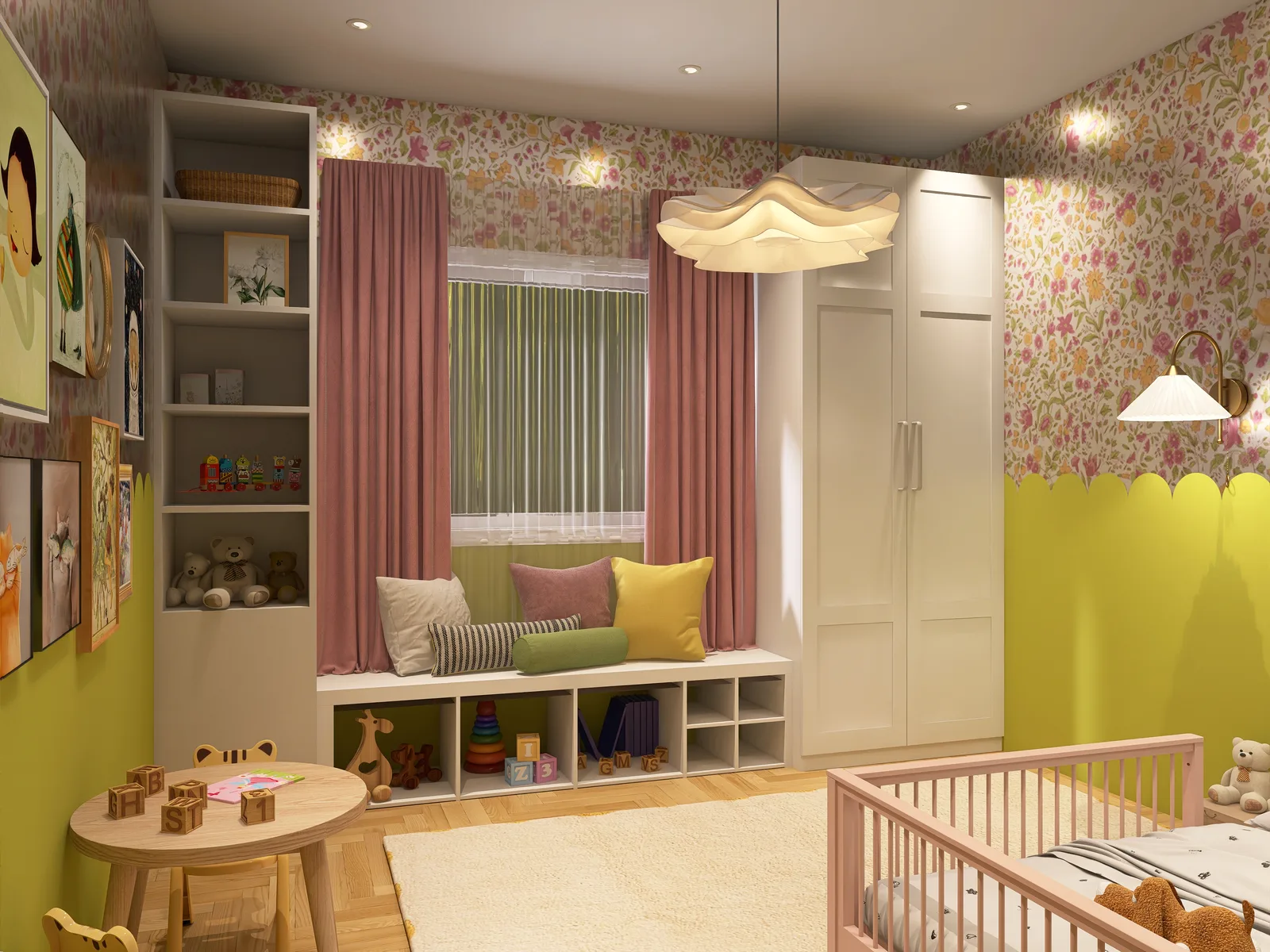
Children’s room window bench with cushions and toy cubbies below, beside floral wallpaper and herringbone parquet
A window bench with toy storage underneath (how a family flat gains a play corner without losing floor space) O Mundo da Sophia project.
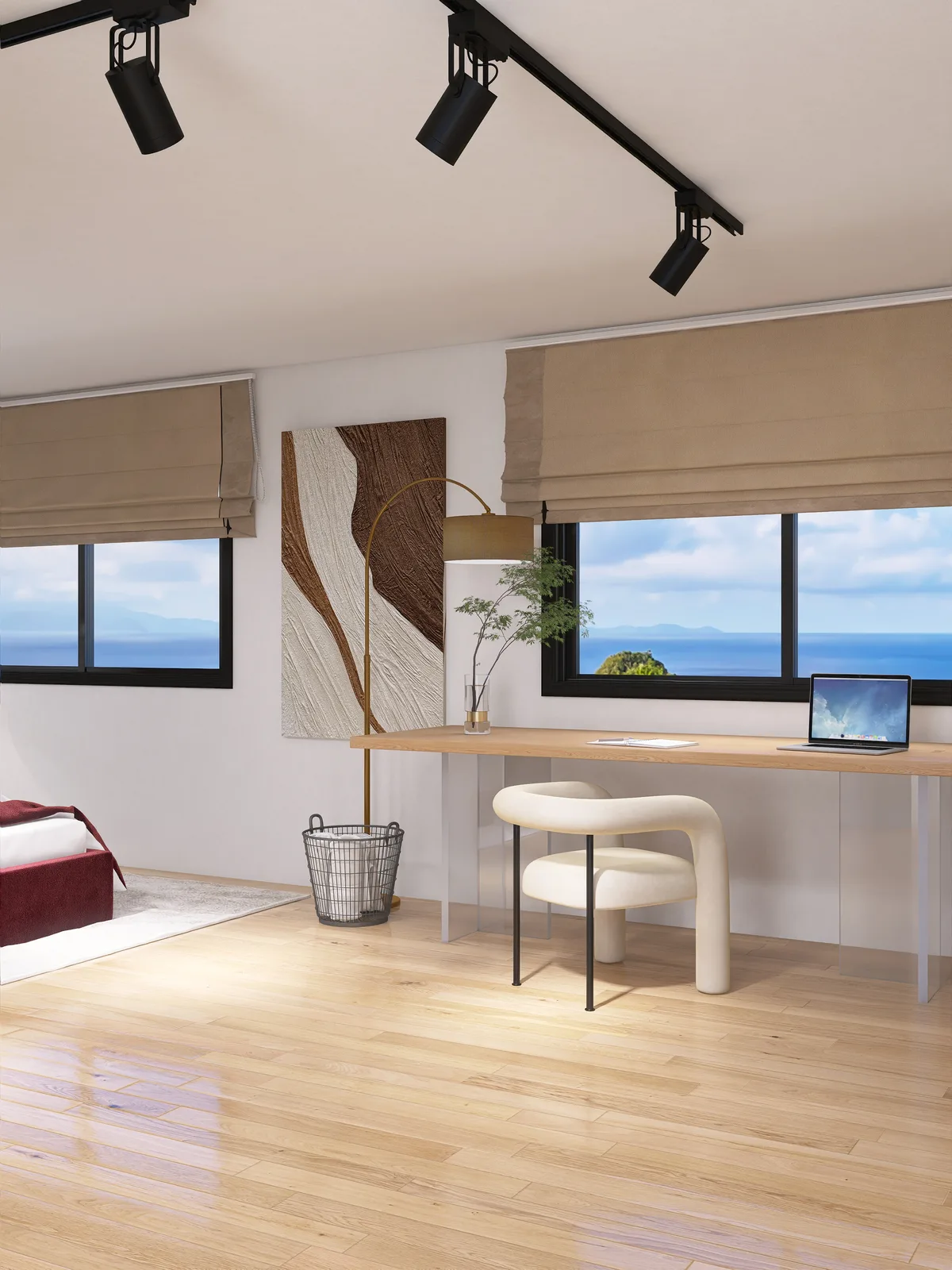
Long light-oak desk on slim transparent legs running under a window wall with beige roman blinds, a cream bouclé armchair, a brass arc lamp and a laptop
A long oak desk running under the window: the home-office solution for flats with no spare room: Romina & CW project.

Frequently asked questions

Working with an interior designer in Coimbra

Do you work in Coimbra if your studio is in Lisbon?

Yes. Coimbra is a short drive up the A1 from the studio, and the on-site days we spend there are working sessions rather than visits. The first one covers a measured survey of every room, photographs of what exists, a look at the electrical board, the window frames, any damp patches and the real ceiling heights, plus a long conversation about how you live day to day. It helps if you can bring the deed plan or any condomínio drawings, and if works are already being quoted, ask your builder to join for the last half hour. Everything after that (concept, drawings and material choices) happens online.

Can you manage my Coimbra renovation while I am still abroad?

That is one of the things we do most. The concept phase runs over video, so time zones are easy to work around. On site we brief the contractor, joiner, electrician and suppliers in Portuguese, then send photo and video updates so you can follow progress without booking a flight. Prefer to stay fully remote? Our online e-design service travels with you.

How much does an interior designer cost in Coimbra?

It depends on the size of the home and how much of the work you want us to carry, one room, a full renovation, or an online concept you build yourself. So we quote per project: tell us about the flat and we reply within 24 hours with a free, phased proposal. The only fixed price we publish is the 1:1 Design Call with Dania Lima: €99 for 60 minutes.

Should I buy an old flat in the Baixa or a new build in Vale das Flores?

We do not give property advice, but we can tell you what each choice means for the design. An old Baixa or Alta building brings character, deep narrow plans, daylight only at the ends, and works that need a licensed architect or engineer. A new build in Vale das Flores or Quinta da Portela arrives with air conditioning and underfloor heating, but echoing tiled floors and almost no storage. Send us the listing and we will talk it through.

How do you deal with damp and cold in old Portuguese houses?

The Mondego valley is humid and foggy in winter, so old stone walls need to breathe: lime-based plasters and mineral paints rather than vapour-tight finishes, planned cross-ventilation, extraction where it is actually needed, and dehumidification. Then comes comfort, window upgrades, a heating strategy chosen before any furniture, wool rugs, and cork or solid wood floors that tolerate humidity swings. Structural and insulation works are coordinated with your architect or engineer.

Do you speak English and handle Portuguese contractors and suppliers?

Yes. Dania Lima works fluently in English, Portuguese and German. Your concepts, proposals and updates arrive in clear English, while quotes, site meetings, supplier orders and condomínio questions are handled in Portuguese by the same person. That single point of contact is what keeps a renovation from turning into a chain of misunderstandings between people who never meet.

Can you furnish the flat before we arrive?

Often, yes. If the keys are already yours and the home needs no building works, we can plan, order and install so that you walk into a finished space instead of a stack of boxes, ending with a styling day. How early we start depends on the scope and on lead times for custom joinery and upholstery, so tell us your arrival date and we will build the schedule backwards from it.

Do you also design clinics, offices or cafés in Coimbra?

Yes. Our commercial interior design service covers hospitality, retail and workspace, a consulting room or small clinic, a studio office for a growing tech team, a café or a guest apartment. The approach is the same as at home: understand how people move through the space, then design light, acoustics, materials and storage around that. Tell us the brief and we reply within 24 hours.


Nearby areas

Interior design beyond the city: Condeixa, Lousã and the Mondego valley

Many homes in the area sit just outside Coimbra, a house in Condeixa-a-Nova near the Roman ruins of Conímbriga, about ten kilometres out; a quinta in the Serra da Lousã foothills bought as a retirement project; family houses in Mealhada and Luso, Cantanhede, Montemor-o-Velho some twenty-five kilometres downriver, Miranda do Corvo or Penacova. Country houses need the same climate thinking as the city, with more roof and more wall to look after.

Along the same corridor we also work in Figueira da Foz on the coast, and further north and south in Aveiro, Leiria and Pombal, with the studio itself in Lisbon. Because Dania also works in German and runs projects in North Rhine-Westphalia, from Düsseldorf outwards, a home split between two countries is familiar territory rather than a complication. And if budget is the thing standing in your way, please look at Design for Everyone.

From the journal

Guides for homes in Coimbra

From an empty T3 in Solum to a home you recognise

Send us the floor plan, the listing or a handful of phone photos, tell us when you want to be living in it, and an English-speaking interior designer will reply within 24 hours with a free, phased proposal. Want to talk it through first? Book a €99 1:1 Design Call with Dania.

Get your free proposal →