
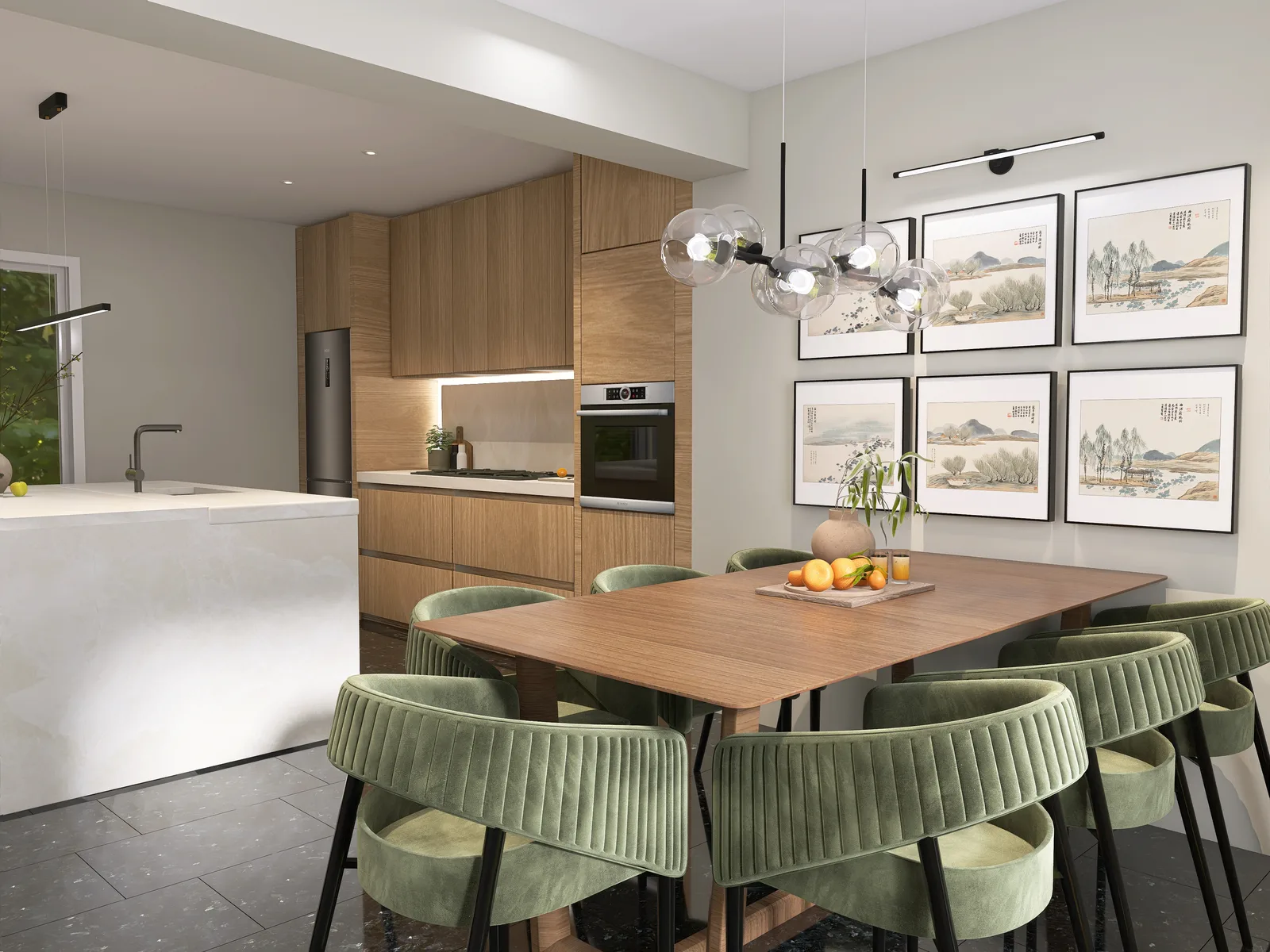
The question usually arrives in the same shape: three studios have answered, one wants a fixed sum, one quotes a rate per square metre, one asks for a percentage of the building budget, and the numbers are far enough apart that at least two must be wrong. They are not. They price different amounts of work, and nobody has said so in writing. This guide gives you the vocabulary to compare them: what drives the price, what each fee model covers, what you hold at the end of every phase, and the eight questions that fit three proposals onto one sheet.
Why there is no single answer
Start with the uncomfortable truth: there is no tariff. In Portugal, as in the UK, the title “interior designer” is not protected and fees are agreed freely between you and the studio. Even Germany (the country most likely to have a table for this) no longer has a binding one: since 1 January 2021 the fee tables in the HOAI, the German fee ordinance for architects and engineers, are orientation values only, after the European Court of Justice ruling of 4 July 2019 (C-377/17). If you are hunting for an official rate card, you can stop.
Scope replaces the tariff. Four things move the price far more than any hourly figure:
- Size and number of rooms, one bedroom versus a whole T3, and how many decisions each one needs.
- The state of the building, furnishing a new-build apartment is a different discipline from renovating a nineteenth-century Lisbon building with damp walls and no straight lines.
- Design intensity, a kitchen with custom joinery, integrated lighting and stone detailing takes many times the design hours of a corridor of the same area.
- How much site supervision you want, drawings nobody checks on site are the most expensive drawings there are.
Market numbers only mean something once you know which of those you are buying. Portuguese marketplaces such as Habitissimo listed €15–30 an hour for basic decor help and €500–1,600 per square metre for “interior decoration” in 2026, but that per-m² range bundles furniture and building work, so it is not a design fee at all. US platforms like Havenly quoted $150–300 an hour and $5,000–20,000 per room in July 2026. Neither says anything until scope is on the table.
The four fee models, and when each is fair
Almost every proposal is one of four models, or a hybrid of two. The British Institute of Interior Design lists six ways designers charge in its client guidance, with a warning worth repeating: misunderstandings over charging are the biggest single source of friction between designers and clients.
| Model | Fair when | Ask before you sign |
|---|---|---|
| Fixed fee per phase | Most full-service residential projects | What is delivered at the end of each phase, and what triggers the next invoice? |
| Hourly rate | Consultations, second opinions, small advisory jobs | What is billable, travel, supplier calls, sample runs? Agree a ceiling in writing. |
| Per square metre | Whole-home concepts of even intensity | Which phases and how many site visits are inside the rate? |
| Percentage of the budget | Large works with a clear construction sum | How is the base defined, and are procurement margins on top of it? |
| Design fee plus a percentage on goods | Furnishing-led briefs with a lot of buying, often for an owner who is not in the country | Is the percentage taken on the invoice value or the trade price, who owns the trade discount, and are imported items quoted before or after duty and IVA? |
The percentage model deserves a note. German cost portals such as kostencheck.de cite roughly 10–15% of the implementation cost for larger interior projects, a reasonable order of magnitude, but it quietly rewards a designer for specifying more expensive things. Not a reason to refuse it; a reason to fix the calculation base in writing. Hybrids are legitimate too: a design fee plus a procurement handling charge, or plus a percentage on goods supplied. None of these is wrong. Undisclosed is wrong.
How a two-country studio prices distance
We work from Lisbon on projects in Portugal and in North Rhine-Westphalia, so travel is a line item we have to be honest about. We split the work by where it has to happen: concept over video, and the on-site phases (measuring, site supervision at the milestones, the styling day) bundled into planned trips. The proposal says which phase is remote and which is on site.
What you receive in each phase
A fee is only comparable if you know what lands on your desk. This is the sequence we use, and it maps onto how the profession works across Europe.
- Briefing and survey. Measured survey and photographic record, a check of existing plans, a realistic budget frame, and the permissions to clarify early, the condomínio for anything touching façade or common parts, the câmara municipal for structural changes.
- Concept. Layout options, material and colour direction, a lighting concept, a first cost frame. In Portugal, orientation and summer heat decide more here than taste does: in Room of Wonders, in Lisbon, the terracotta curtains were an answer to the afternoon sun before they were a colour choice.
- Technical planning. Joinery drawings, socket and lighting positions, finish schedules and specifications precise enough that carpenter, electrician and painter all quote for the same thing.
- Execution supervision. Site visits at milestones, checking that what arrives matches what was drawn. Quinta Maluhia is the argument for this phase: a fireplace re-faced in beige tile and walnut shelves at exactly the right height survive only because somebody stood in the room while they went up.
- Styling and handover. The last layers (art, textiles, plants) and a snag list you can hold a contractor to.
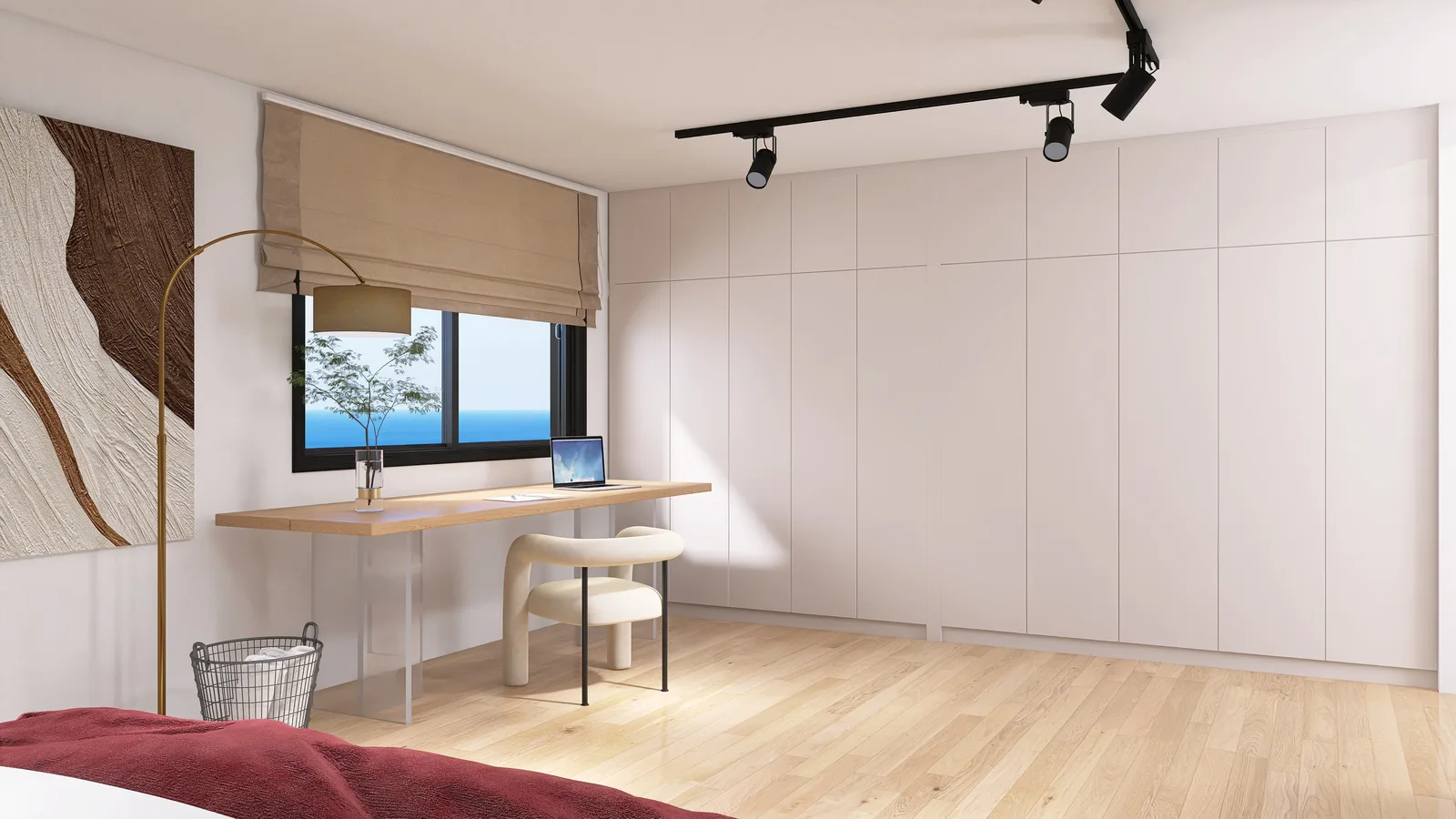
The German weighting is instructive. The HOAI splits interior work into nine service phases (§ 34, Anlage 10), and two carry most of the fee: technical planning at 30%, site supervision at 32%. Concept design is 15%. A proposal that is cheap because it stops after the concept is not cheap, it is unfinished.
The hidden costs a good designer prevents
The fee is visible; the savings are not. Five places where money quietly leaves a project, and the last two are where owners buying from abroad lose the most:
- Ordering twice. Scale errors, a sofa that will not turn on the stairs of a 1930s Lisbon building, an island planned without checking the drainage route. As the US platform Havenly puts it (July 2026), most people do not overspend on furniture, they overspend on furnishing the room twice.
- Rework on site. Changes after work has started, as the BIID puts it, tend to be expensive and time-consuming. One approved drawing is cheaper than a week spent undoing what was built from a sketch and a phone call.
- Permissions found late. Under the Portuguese Civil Code (arts. 1422 and 1425), works that change the architectural line of the building or touch common parts need the owners’ assembly; structural or façade changes may require prior notification or a licence, and the câmara municipal confirms which. If you are still buying, read the condomínio rules and the recent minutes before the CPCV, not after the keys.
- Imports, duty and lead times. Pieces shipped in from the UK or the US arrive with customs handling, tax at the border and delivery windows measured in months, not weeks. A specification written without lead times inside it will stall a site that was otherwise ready.
- Nobody at the door. Deliveries need a person, a lift that fits and somewhere dry to stand for three weeks. Owners who are not in the country pay for that twice (once in storage, once in re-delivery) unless somebody local is holding the calendar and refusing the wrong pallet.
And keep a contingency. In an older building (damp, tired wiring, unknown drains) holding a percentage of the budget in reserve is standard practice. A studio that raises it in the first meeting is quoting you the whole job rather than the pleasant half of it, and if you are managing the build from abroad, that reserve is what pays for the extra month of storage when a wall turns out to be hollow.
How to read a proposal
Five things must be legible in a proposal worth comparing, and if you will be reading it from another country, the weighting shifts towards the last three:
- Named phases with deliverables and a payment schedule tied to them, plus the exclusions in writing, structural engineer, licensing architect, electrician’s project. A fixed sum without deliverables is a blank cheque in both directions.
- Scope boundaries: which rooms, which drawings, how many revision rounds per phase, and what counts as a change of brief rather than a revision.
- Who represents you in the room: how many site visits, who attends them, who signs off a milestone in the weeks you cannot fly in, and what reaches you afterwards, photographs, a snag list, a decision log you can read at a distance.
- Language and paper trail: which language the contract, the drawings and the instructions to trades are written in, and who translates when a carpenter asks a question at eight in the morning.
- Money flow on purchases: does the studio order on your behalf or in your name, is there a handling fee, are trade discounts passed on or declared, who is invoiced when a supplier asks for a deposit, and is every figure shown with IVA included or excluded?
Eight questions to ask before you sign
Put the same eight to every studio on your shortlist (the BIID suggests approaching three) and write the answers on one sheet. “We’ll see” is an answer too.
- Which phases does this fee cover, what do I hold at the end of each one, and can I stop after the concept and keep the drawings?
- In which language will the contract, the drawings and the instructions to the trades be written, and who translates on site?
- If I am out of the country for most of the build, who walks the site, how often, and what report reaches me after each visit?
- Who places the orders, in whose name, and who is the legal buyer if a piece arrives damaged or never arrives at all?
- How are imported items handled, customs and border tax, storage while the site is not ready, and who signs for a delivery?
- How do you handle supplier commissions and trade discounts: passed on, declared, or kept?
- What is excluded that I will still need (structural engineer, licensing, electrical project, condomínio approval) and do you tell me before I sign or when the invoice arrives?
- Are your fees quoted with or without IVA, in euros, and what triggers each payment milestone?
Our own answers sit on the service pages: full-service interior design for projects that need every phase, an interior design consultation when you mainly need direction, online e-design when there is no site work to supervise. Every request receives a free, phased proposal within 24 hours; reduced-rate packages exist under our Design for Everyone programme, conditions on request.
Where a €99 design call fits
Before any of this, there is a cheaper step. Our 1:1 Design Call is 60 minutes on Google Meet for €99, paid securely online, the least expensive way to find out whether you need a full project at all. Bring a floor plan, photos and your questions.
Three situations the call is built for, by way of example: a couple relocating to Lisbon deciding between e-design and full service; a remote buyer wanting a floor plan sanity-checked before the promissory contract (CPCV) is signed; a family in Coimbra unsure whether a kitchen needs a designer or a good carpenter. Sometimes the honest answer is that it does not need us. The call is a filter, not a commitment.
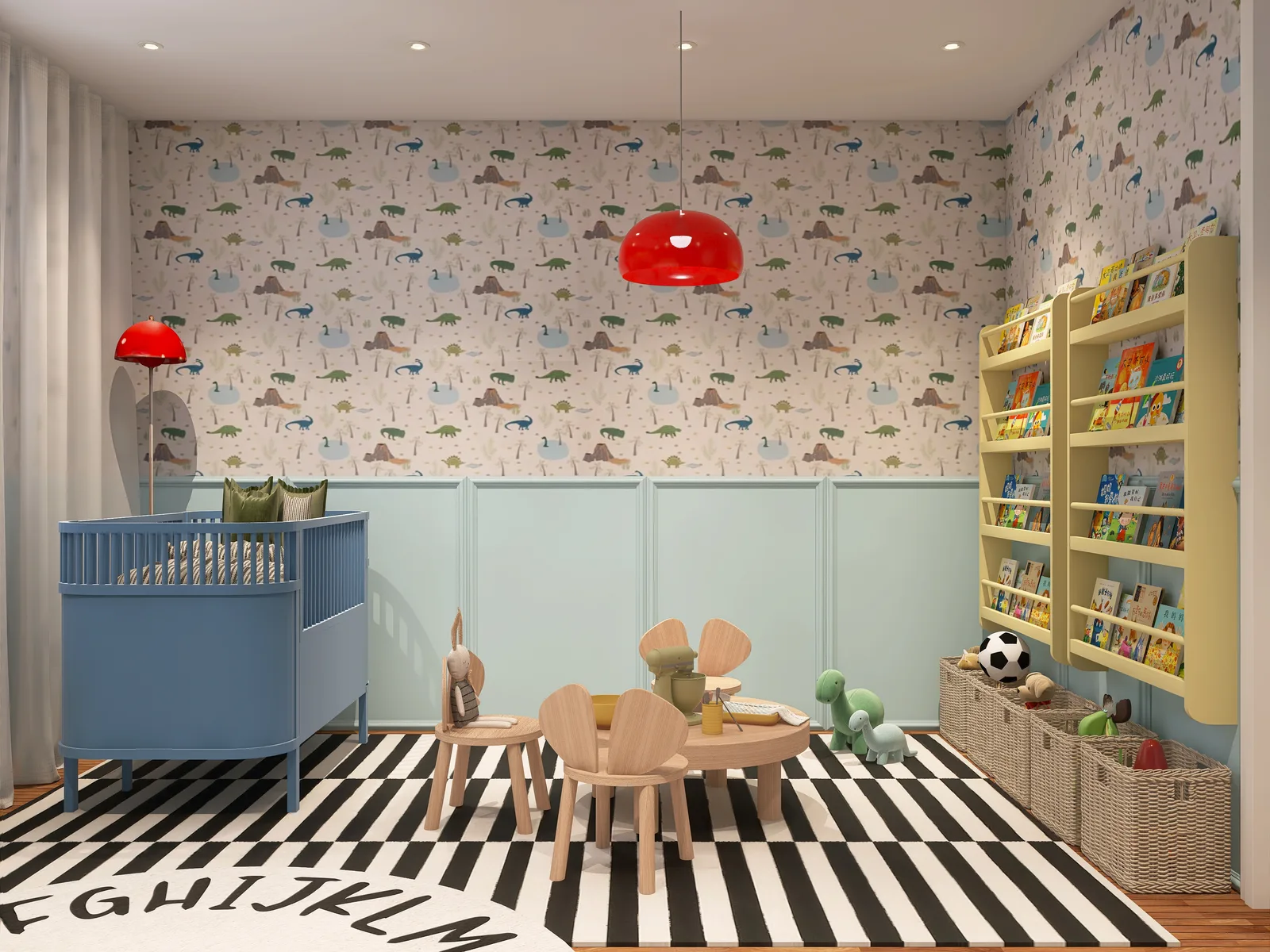
Distance changes the plan, not the price logic. Whether we work as your interior designer in Lisbon, your interior designer in Coimbra or your interior designer in Düsseldorf, the proposal is built the same way: named phases, named deliverables, and a clear line between what happens over video and what happens in the room.
Frequently asked questions
How much does an interior designer cost per hour in Portugal?
There is no set rate. Portuguese marketplaces list very low hourly figures for basic decor help (Habitissimo quoted €15–30 per hour in 2026) while established studios price by phase or by project. Compare the deliverables behind the number, and if you are quoted an hourly rate, agree a ceiling in writing first.
Is a price per square metre a good way to compare designers?
Only for whole-home concepts of similar intensity. A kitchen with custom joinery takes far more design time per square metre than a corridor, so a flat m² rate either over-charges or under-charges someone. Ask which phases and how many site visits it includes. The €500–1,600/m² quoted by marketplaces such as Habitissimo bundles furniture and building work, not design fees alone.
Can I work with a Portuguese studio if I do not speak Portuguese?
Yes. Daradiant works in Portuguese, English and German, so the brief, the drawings and the written instructions can be handled in your language while the conversation on site happens in Portuguese. Ask any studio you shortlist which language the contract and the site instructions will be written in, and who translates when a carpenter asks a question at eight in the morning.
Do interior designers earn commissions from suppliers?
Some do, some pass trade discounts on to the client, some charge a handling fee instead. None is wrong as long as it is written into the proposal. The BIID checklist asks designers to declare any payments or benefits received from contractors and suppliers, ask the same question and have the answer put in the contract.
Can a Lisbon-based studio run my project while I am abroad?
Yes, if the process is built for it: concept over video, on-site phases bundled into planned trips for measuring, site supervision at the milestones and the styling day, and photo or video updates in between. The JJ Project in Heinsberg is our completed reference in NRW.
What is the cheapest way to get professional advice before committing?
A paid consultation. Daradiant offers a 60-minute 1:1 Design Call for €99 on Google Meet with secure online payment. If it turns into a project, the proposal itself is free and arrives within 24 hours.
The next step
A fair proposal is not the cheapest one. It is the one you can read: phases you recognise, deliverables you can point at, a clear statement of what happens to your money when furniture is bought. Ask that of everyone you shortlist, ourselves included.
When you are ready, tell us about your project and we reply within 24 hours with a free, phased proposal. If you would rather talk first, a €99 1:1 Design Call is usually enough to know what to do next.