← Daradiant Interiors

English-Speaking Studio · Kreis Heinsberg

Interior designer in Heinsberg: English-speaking, already at work here

From the Burgberg and St. Gangolf down to the villages along the Rur, Kreis Heinsberg (the rural district around the town) is where a lot of international families land, and where German houses are handed over bare. Daradiant designs and furnishes yours in English, briefs the trades in German, and has one finished project in town: The JJ Project.

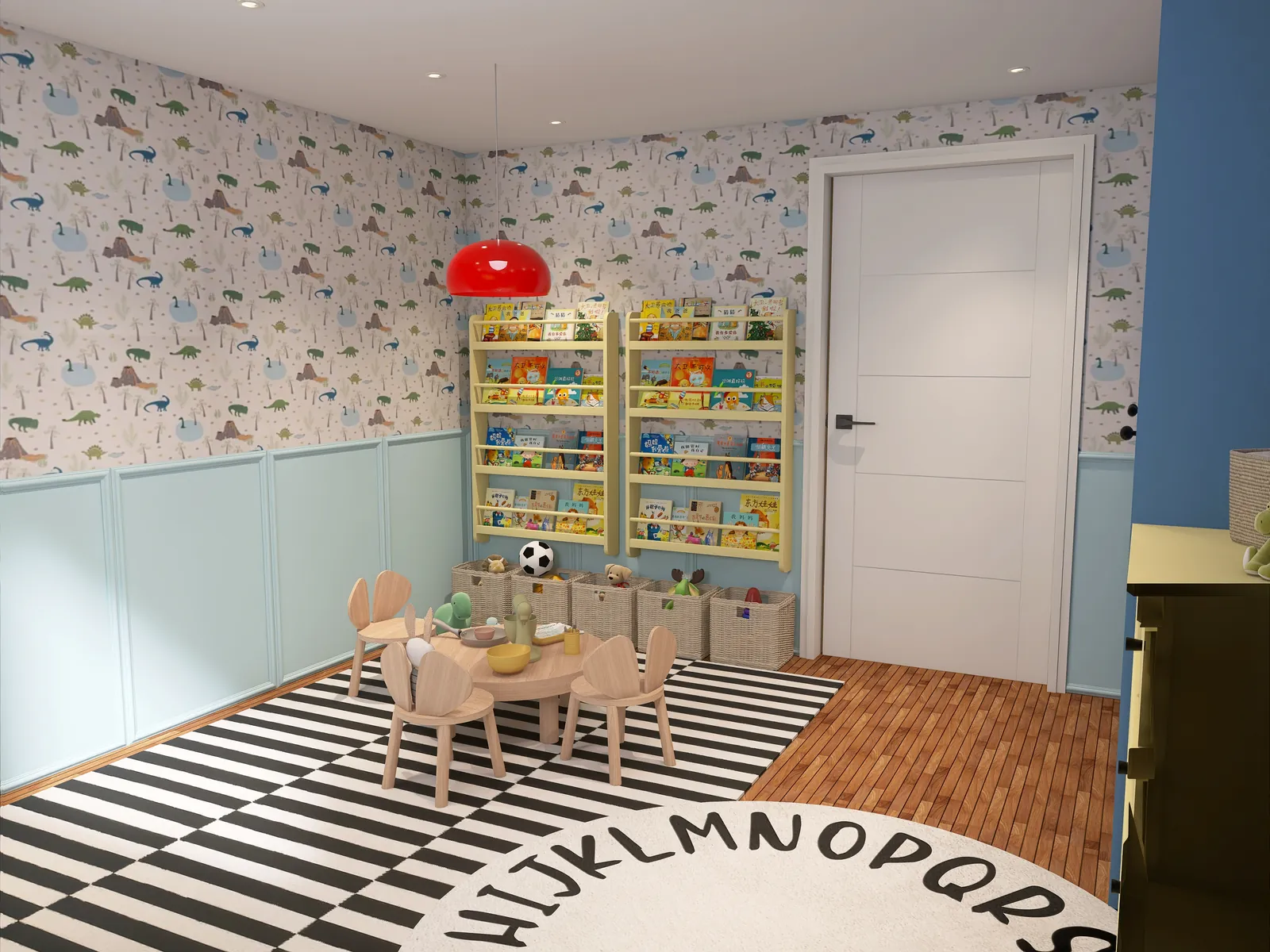
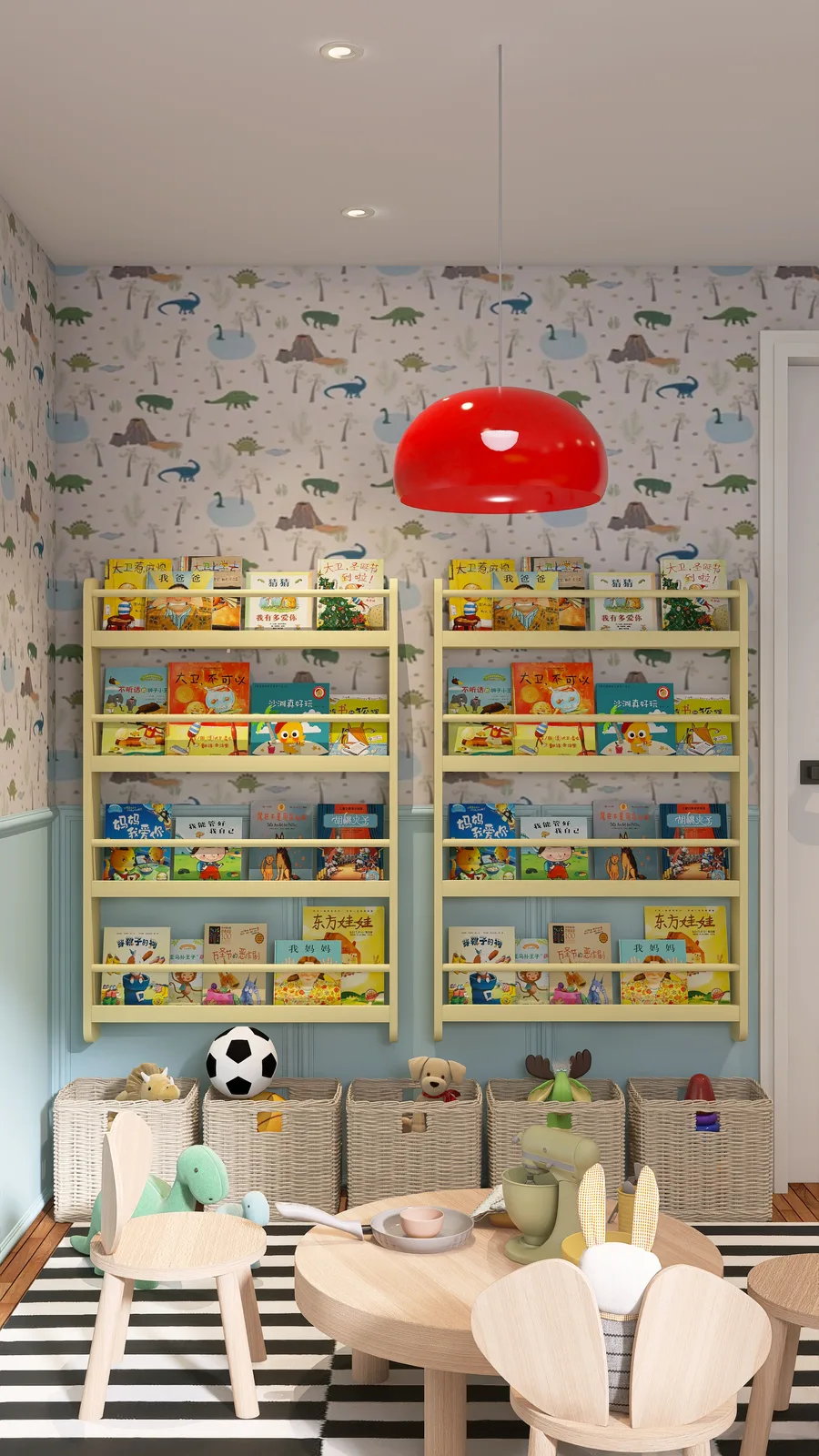
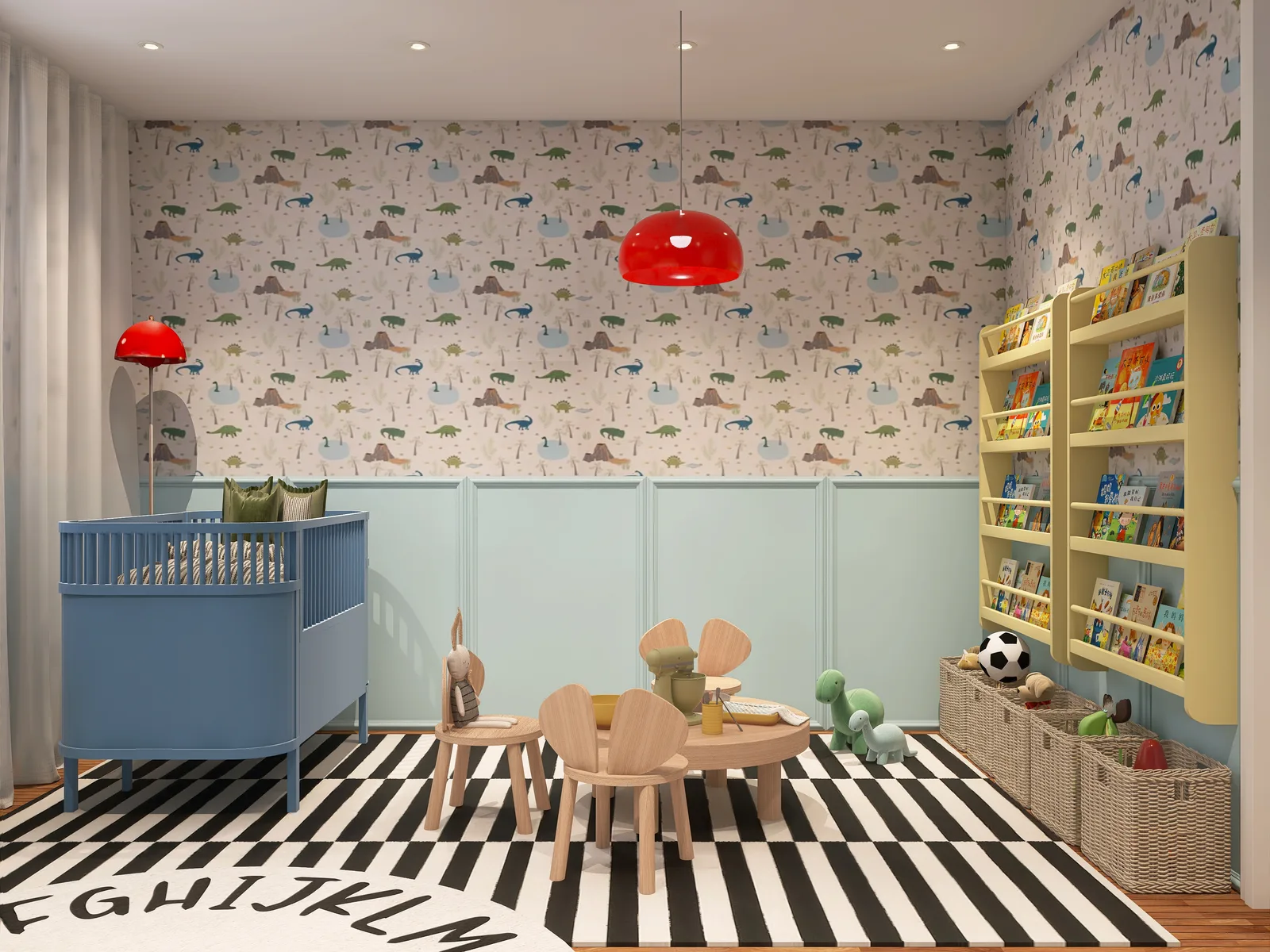
Child’s room from The JJ Project in Heinsberg with mint wainscot panelling, a dinosaur-wallpaper wall, a powder-blue cot, pale-yellow book racks and a wooden play table on a striped rug

A finished project in Heinsberg

An interior designer who already knows this town

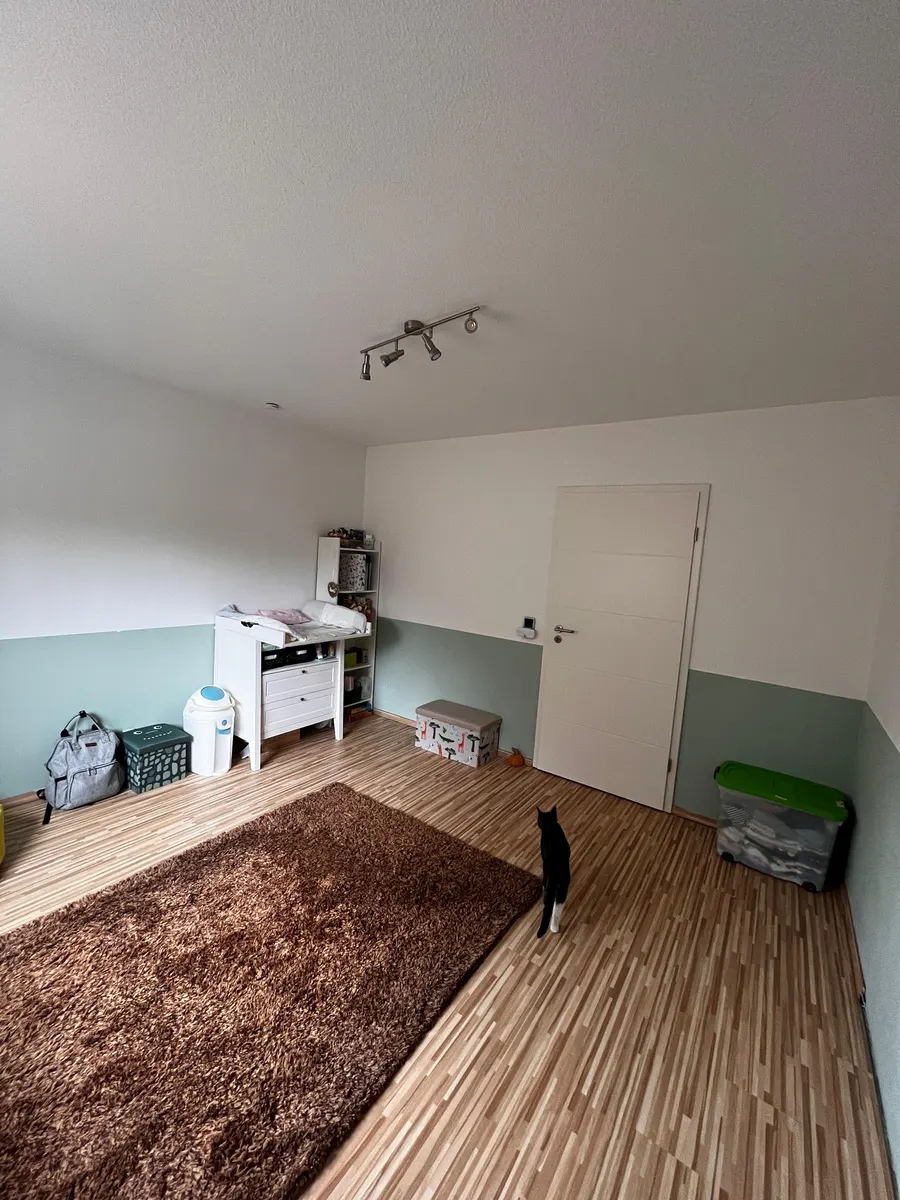
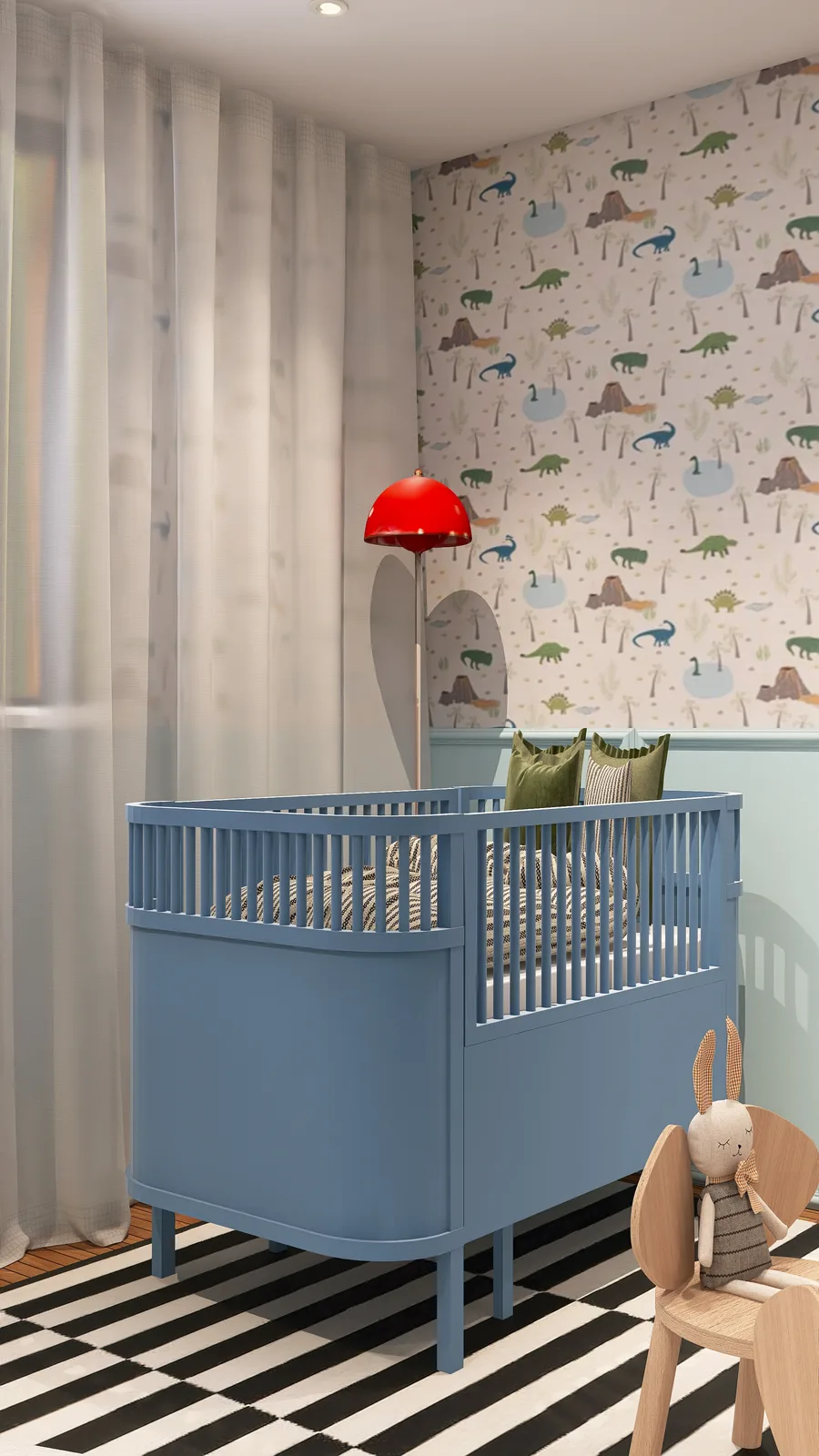
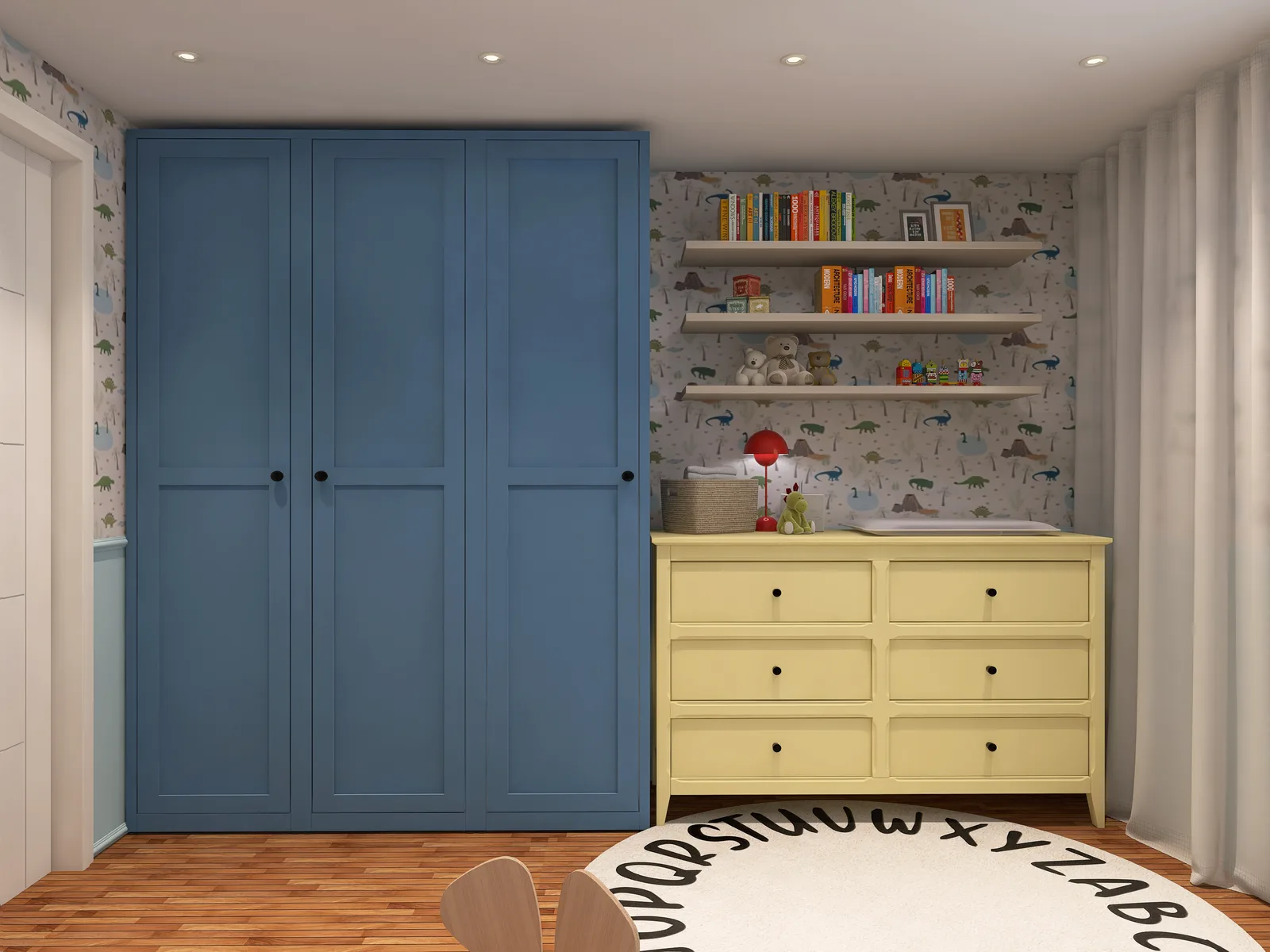
Search for a designer in Heinsberg and most of the studios you find are based in Cologne, Düsseldorf or Wuppertal. Ours sits in Lisbon, and has already delivered a room here. The JJ Project turned a nearly empty child’s room in Heinsberg into a complete little world: a powder-blue crib and wardrobe, a pale-yellow changing dresser, mint wainscot panelling, dinosaur wallpaper, book racks at child height and a play table by the window. It is one of the few projects we can show with genuine before photographs, and it is the reason this page exists.

Behind it is Dania Lima, founder of Daradiant Interiors, who works fluently in English, German and Portuguese. You talk to her in English about how your family actually lives; she talks to the joiner, the kitchen studio and the electrician in German. Every project request gets a personal answer within 24 hours and a free, phased proposal, no hourly guesswork, no vague packages.

  • Full-service design for houses bought or rented across Kreis Heinsberg
  • Kitchens, wardrobes and lighting planned for homes handed over empty
  • Concept phase entirely over video, you can start before you land
  • German-language briefing and coordination of joiners, kitchen studios, painters and electricians
  • Single rooms welcome: a nursery, a study, a living room that never came together

Posted to NATO Air Base Geilenkirchen

Making a bare German house feel like home

There is no family housing on the base, so E-3A Component families and their civilian colleagues rent houses in Geilenkirchen, Gangelt, Heinsberg, the Selfkant and the villages in between. Then the keys arrive and the house is genuinely empty: no fitted kitchen, no wardrobes, often a bare bulb on a ceiling hook. With a two-, three- or four-year posting, nobody wants to spend the first year of it shopping.

01

Start before the container lands

Send us the floor plan and the photos from the housing office. We build the layout, the concept and a sourcing list from German suppliers over Google Meet, so the first weekend after arrival is about unpacking, not measuring.

02

Furniture that actually fits

Ceilings here often sit near 2.40 m, hallways are narrow and rooms are compact. We specify low, horizontal pieces, floor-to-ceiling curtains and modular storage, chosen so it travels to the next posting or resells cleanly when you leave.

03

Reversible by design

Freestanding wardrobe walls, panelling that unscrews, plug-in wall lights, warm dimmable bulbs, rugs and curtain rails: a rental that looks finished and hands back without a single argument about the deposit.

04

One kitchen decision, sorted

German kitchen studios quote in German, in modules, with fitting and appliances priced apart. We brief them, compare the offers side by side and supervise the fitting, including whether buying or renting a kitchen makes sense for your posting length.

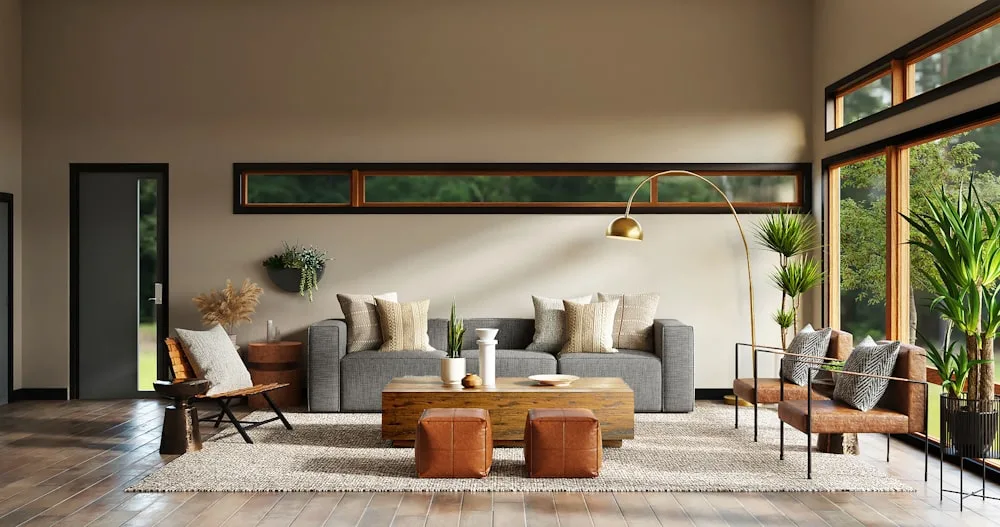
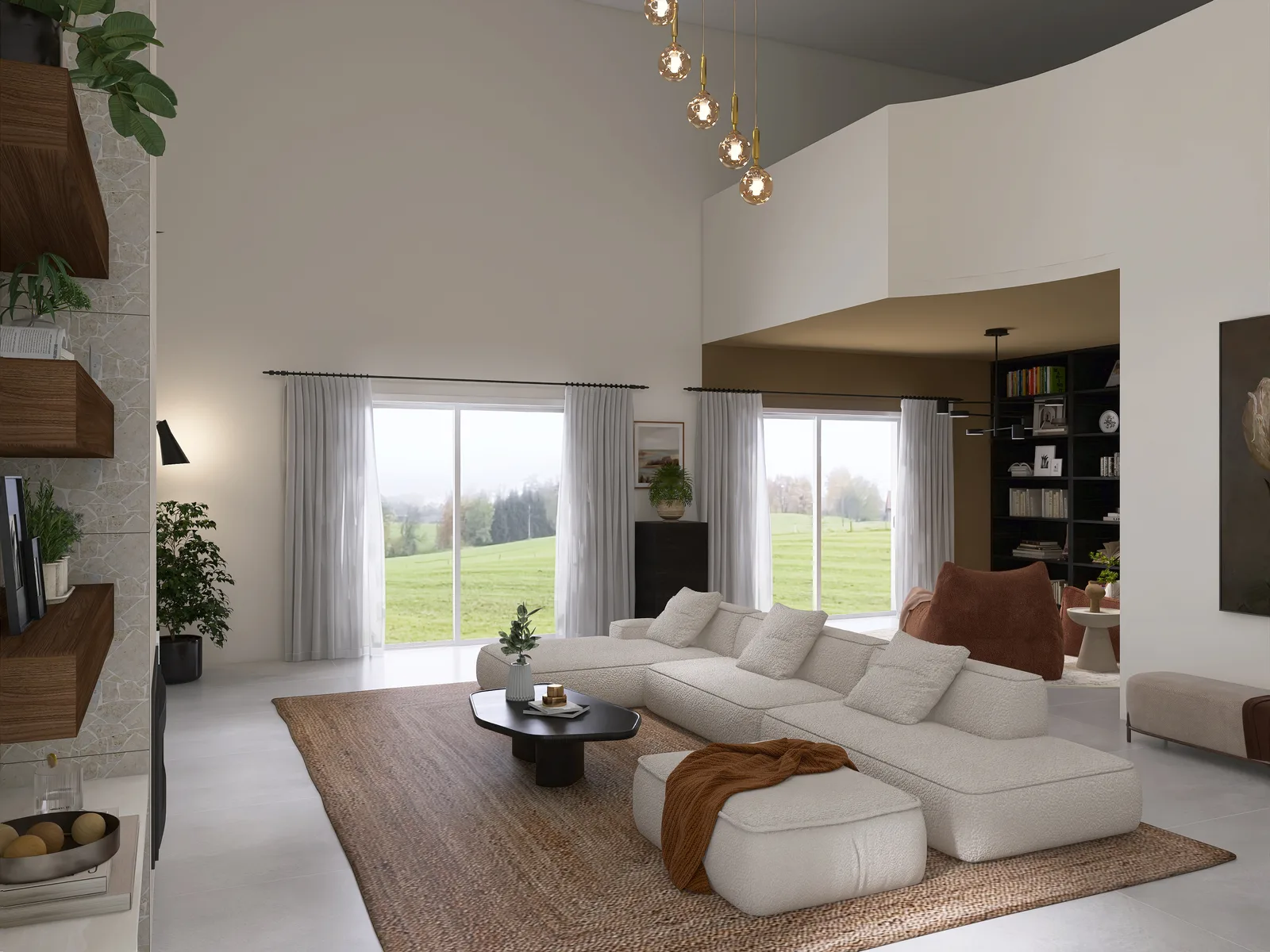
Warm living room with oak surfaces, layered lighting and textiles in ochre and terracotta tones

Owners and renovators

Bought a house in the Kreis? Brick, 1970s, full of potential

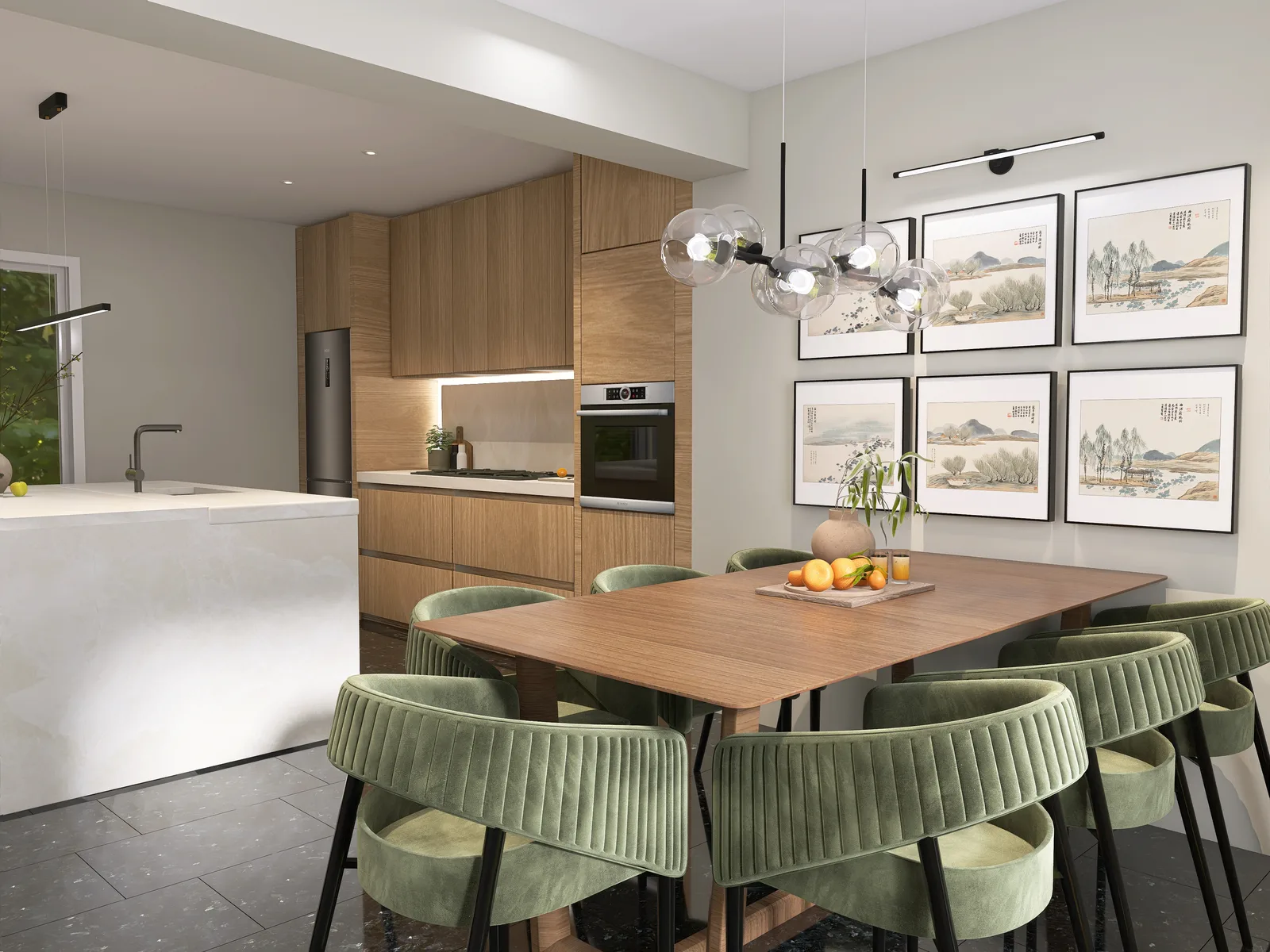
Prices here are noticeably below those in Düsseldorf and Aachen, which is why so many people buy the house rather than rent the flat, and why the budget can go into the rooms themselves. What you buy is usually a brick-faced detached house or a semi from the 1960s to the 1990s in Kirchhoven, Dremmen, Karken or Oberbruch, or one of the workers’ houses the Glanzstoff era left behind in Oberbruch, Grebben, Dremmen and Randerath. Compact rooms, a closed-off kitchen, low ceilings, small windows behind a dark clinker façade, and a cellar that feels damp because the ground here is flat river land between the Rur and the Wurm.

The work is almost always the same three moves: open the kitchen into the living room, give the entrance real storage, and make the cellar dry and usable with mineral plasters and breathable paint. Then comes light. Niederrhein winters are long, grey and low, the standard white-and-grey palette makes them worse. We use warm whites and ochre, light oak and walnut instead of dark stains, wall lights and dimmable warm bulbs instead of one ceiling cluster, and let velvet, bouclé and wool carry the colour. It is the same warmth we build into our Portuguese work, applied to a house that needs it far more.

  • Opening up ground floors in Siedlungshäuser and 1970s family homes
  • Custom joinery for awkward alcoves, sloped attic rooms and narrow hallways
  • Building a plot in Uetterath, Grebben or Schafhausen? Fix built-ins and light points before the drywall closes
  • Heat pump and underfloor heating: rugs and curtains for acoustics, no thick carpet over the floor circuits
  • Downsizing into a barrier-free bungalow near the Rur meadows, favourite pieces translated into a smaller plan

The JJ Project · Heinsberg

Nurseries and children’s rooms, from empty to finished

A child’s room is often the first project a family commissions here, a new baby, a new posting, a room that has been a storage space for two years. This one in Heinsberg was designed to grow: washable surfaces, storage the child can reach, colours that still work at school age. Drag the slider to see the room as it stood before we started.

After: the same view finished, dinosaur wallpaper above mint wainscoting, pale-yellow book racks at child height, a wooden play table with mouse-ear chairs on a black-and-white striped rug and a red dome pendant above
Before: the same room nearly empty, with bare white walls, a plain sage-green painted band and a single white changing unit
Before After
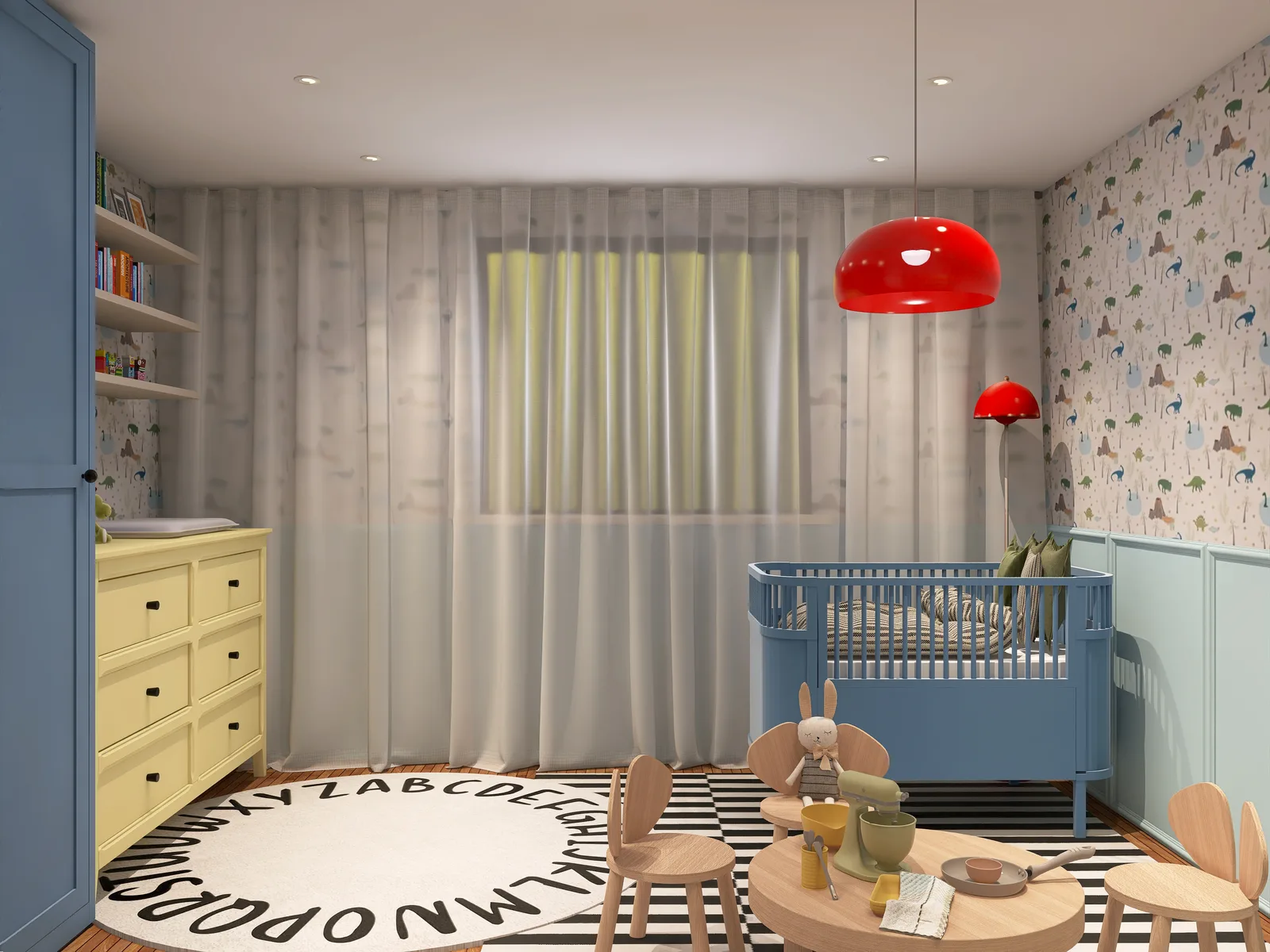
Child’s room window wall with sheer floor-to-ceiling curtains, a powder-blue crib, a pale-yellow chest of drawers, a red dome pendant and a round alphabet rug
Sheer curtains taken from ceiling to floor and a red dome pendant over the play table, light spread wide, in a room that gets little of it in winter.
Powder-blue crib in front of dinosaur wallpaper above mint wainscot panelling, with a red mushroom-dome floor lamp and sheer curtains
Powder-blue crib against the dinosaur wallpaper, pattern on one wall only, so the room stays calm.
Powder-blue wardrobe beside a pale-yellow changing dresser with open shelves above
Wardrobe and pale-yellow changing dresser: nappy station today, homework drawers in a few years.
Two pale-yellow wall-mounted book racks holding forward-facing picture books above a row of wicker toy baskets, with a round wooden play table and mouse-ear chairs on a black-and-white striped rug
Books turned face out, baskets at floor level: a three-year-old can tidy this corner without help.
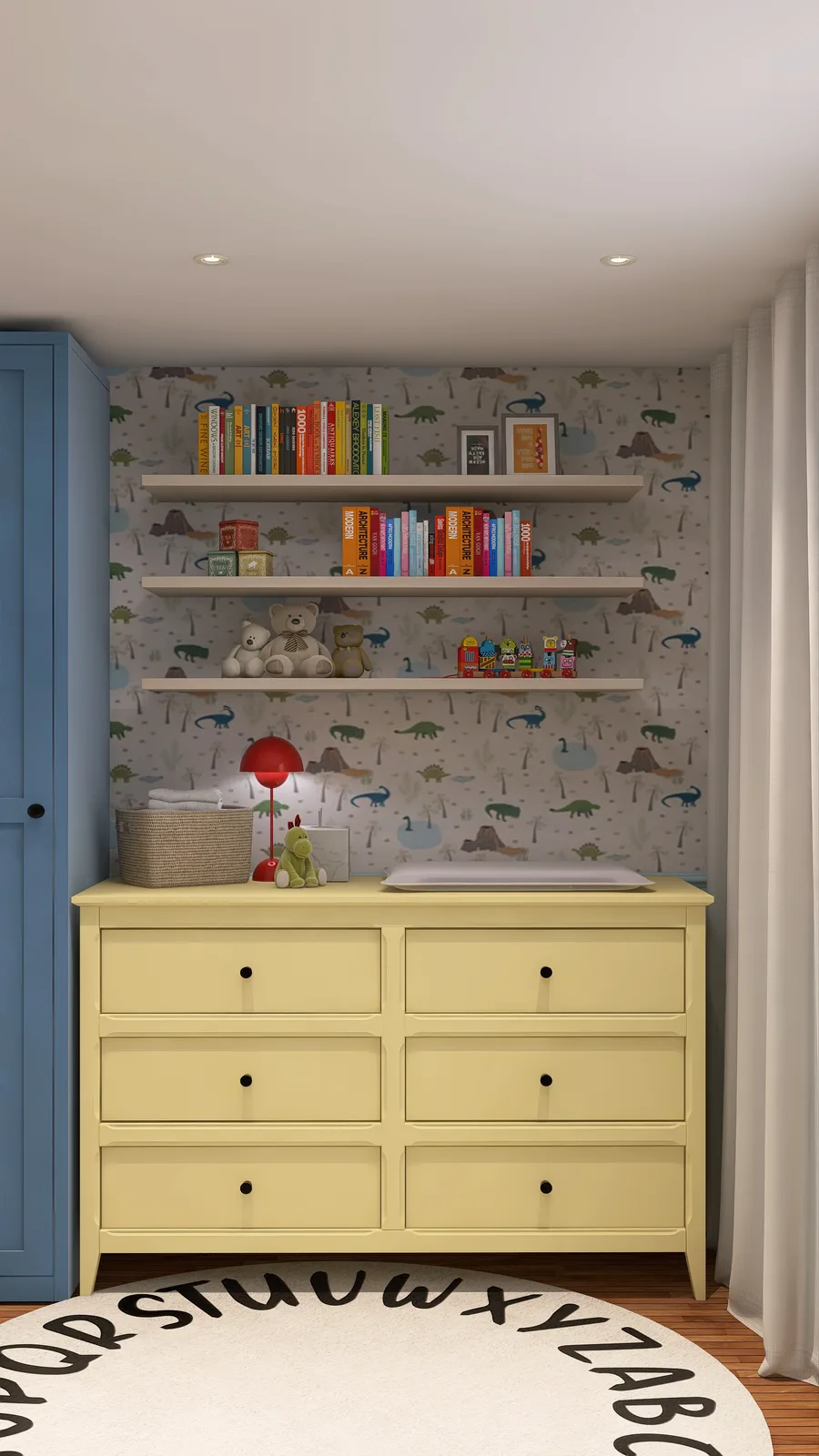
Pale-yellow changing dresser with a small red table lamp, a wicker basket and a plush dinosaur, below three floating shelves of books, teddy bears and wooden toys against dinosaur wallpaper
Floating shelves above the dresser keep the changing surface clear, the detail that decides whether a nursery stays tidy.

What a Lisbon studio means here

From Lisbon to the Rur: how a Heinsberg project actually runs

We are in Lisbon, not around the corner, and there is one finished room in Kreis Heinsberg to show what that produces. Here is exactly what that means in practice, and why it still works for a house between the Burgberg and the Selfkant.

Concept over video, from the housing-office plan

The scanned floor plan the Geilenkirchen housing office hands you, plus a phone video of the empty rooms, is enough to begin: layouts, moodboards, materials and lighting get developed and revised in video calls. The design is settled before anyone spends money on site, and before the removal lorry turns into your street.

On site when it matters, all across the Kreis

Trips to NRW are bundled around the moments that need a designer in the room: measuring, site supervision at the key milestones and the final styling day. The Kreis is compact, the A46 junction at Dremmen and the RB 33 through the Wurm valley put Oberbruch, Kirchhoven and Gangelt inside one working day, so a measuring appointment and a supplier visit fit into the same trip. Between them you get photo and video updates, and the trades have one contact who answers.

One designer, both countries

Portuguese light and warmth meeting German precision is not a slogan here, it is why a living room behind a dark clinker façade ends up in ochre, oak and velvet rather than grey laminate. The wardrobe wall or the alcove shelving is drawn by us and built by a joinery workshop in the Kreis, then checked to the millimetre on the fitting day.

Three service levels cover almost every situation in the Kreis: full-service interior design when you want the whole thing run for you, an interior design consultation when you mostly need direction and a plan, and online e-design when you are still abroad or the project is one room. Shops, practices and restaurants on the Hochstraße or out in Oberbruch are handled through commercial interior design. If budget is the obstacle, look at Design for Everyone, and if you want to see the whole portfolio first, including the Lisbon work that gave this studio its palette, the projects page is the place to start.

Frequently asked questions

Interior designer, Kreis Heinsberg: answers before you sign a lease or a deed

Do you speak English, and can you deal with German contractors?

Yes. Founder Dania Lima works fluently in English, German and Portuguese. You get concepts, drawings and updates in English, while briefings, quotes and site conversations with joiners, kitchen studios, electricians and painters happen in German. That is usually the single biggest relief for international households here: you stop translating your own home renovation.

Where is the studio? Are you based in Heinsberg?

The studio is in Lisbon, Portugal. There is no NRW office, no showroom and no local team, what there is instead is one finished room in Kreis Heinsberg to show what the working method produces. The concept phase runs over video, and on-site phases in Heinsberg are planned as bundled trips for measuring, site supervision at the milestones and the final styling day. The JJ Project, a child’s room in Heinsberg, is our completed local reference.

Can we start before we arrive in Germany?

Yes, and it is often the smartest moment to start. With the floor plan and photos from your landlord or housing office, we can build the concept, room layouts and a sourcing list over Google Meet while you are still packing. The simplest first step is the €99 one-hour design call; from there, e-design or full-service takes over.

What does an interior designer cost in Heinsberg?

Only one thing has a fixed price: the 1:1 design call at €99 for 60 minutes, booked and paid securely online. Everything else depends on your rooms and scope, so you receive a free, phased, transparent proposal within 24 hours of your request, each stage priced separately, so you can decide how far you want to go.

We rent our house, is it still worth it?

Very much so, a rented house is exactly the situation reversible design is built for. We work with freestanding wardrobes, panelling that unscrews, plug-in lighting, rugs, curtain rails and paintable surfaces, nothing your landlord will object to at handover. Pieces are chosen to fit German room sizes and to move on with you or resell well.

Can you design just a nursery or a single room?

Yes. The JJ Project in Heinsberg was exactly that: one nearly empty child’s room, photographed before and after. Single rooms suit the consultation and e-design formats well (one concept, one materials and furniture list, one shopping plan) and they are a good way to see how we work before handing over a whole house.

Do you work in Geilenkirchen, Gangelt and the Selfkant?

Yes, across Kreis Heinsberg, including Geilenkirchen, Gangelt, Selfkant, Waldfeucht, Wassenberg, Hückelhoven, Erkelenz, Übach-Palenberg and Wegberg, and on to Aachen and Mönchengladbach. If your address is on the Dutch side of the border, ask us: we will tell you honestly whether we can serve it on site or whether e-design is the better route.

Do you offer reduced-rate options?

Yes. Design for Everyone is our programme of pro-bono Radiant Hearts projects and reduced-rate packages for households who could not otherwise work with a designer. Conditions and pricing are on request, write to us, describe your situation honestly, and we will tell you what we can do.

Nearby areas

Also serving Geilenkirchen, Gangelt, Selfkant and the rest of the Kreis

We work across Kreis Heinsberg (Geilenkirchen, Gangelt, Selfkant, Waldfeucht, Wassenberg, Hückelhoven, Erkelenz, Übach-Palenberg and Wegberg) and on into the cities most people here commute to. If your home is further down the A46 or the Rhine, we have pages for Aachen, Düsseldorf and Neuss as well. Wherever you are, the first step is the same: tell us about the house.

From the journal

Guides for homes in Heinsberg

A brick house in Kreis Heinsberg, finally full of light

Send us the floor plan, the photos and the date you get the keys. You will have a personal answer within 24 hours and a free, phased proposal, in English, with the German side handled for you. Want to talk it through first? Book a €99 1:1 Design Call with Dania.

Get your free proposal →